
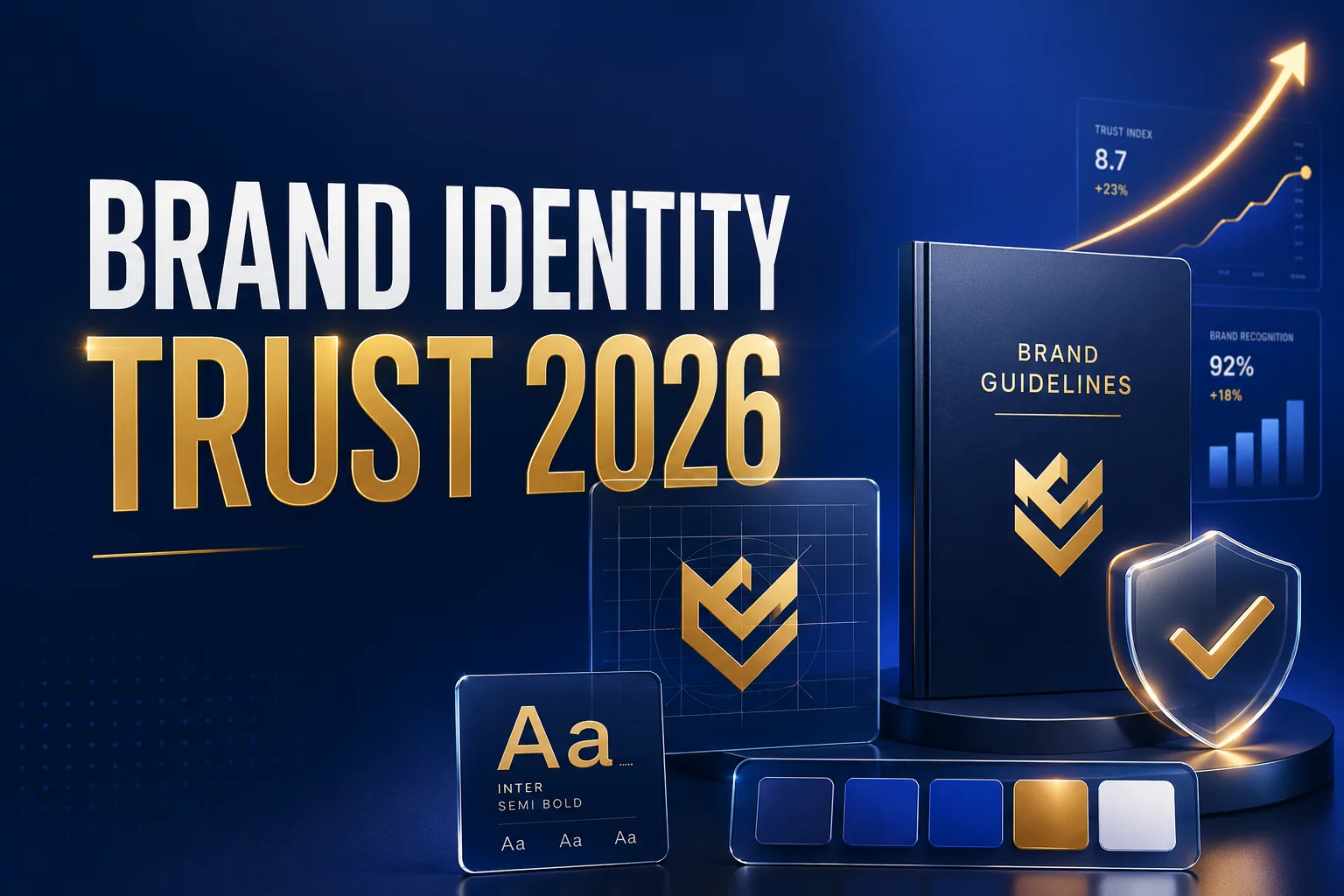
Trust is not built through advertising alone. It is built through consistency — the same colours, the same voice, the same visual language showing up everywhere a customer encounters your brand. A well-designed brand identity is not a creative luxury. It is a commercial asset that reduces your cost of sale, increases customer lifetime value, and allows you to charge a premium.
For Indian businesses competing in increasingly crowded markets, brand identity is often the difference between being remembered and being ignored. Here are the seven elements DigiVeritaz builds into every brand identity project — and why each one matters commercially.
Element 1: Logo and Visual Mark
Your logo is not your brand — but it is the anchor of your brand identity. A well-designed logo works at every size, in every colour context, and across every medium from a business card to a billboard. The most durable logos are simple, distinctive, and meaning-dense. They do not explain the business literally — they represent its character.
Avoid the temptation to over-design. The logos that last decades — TATA, Infosys, Nykaa — are not complex. They are confident.
Element 2: Brand Colour Palette
Colour is the fastest trust signal in visual communication. Research consistently shows that colour increases brand recognition by up to 80%. A primary brand colour, two to three secondary colours, and defined usage rules for each — this is the minimum a brand colour system should contain.
For Indian brands, cultural colour associations matter deeply. Red signals energy and auspiciousness. Green communicates growth and reliability. Navy and dark blue project authority and trust. Your colour palette should be chosen with your specific audience, category, and cultural context in mind.
Element 3: Typography and Font Hierarchy
Typography is the personality of your written communication. A brand using a bold geometric sans-serif feels different from one using an elegant serif — even when the words are identical. Define a heading font, a body font, and clear size and weight hierarchies for each context.
For brands operating in India, ensure your typeface choices work correctly with Devanagari and other Indic scripts if your audience communicates in regional languages. A brand that looks polished in English but breaks in Hindi loses credibility with a significant share of the Indian market.
Element 4: Tone of Voice and Brand Messaging
Visual identity without verbal identity is half a brand. Your tone of voice — how your brand speaks in copy, captions, customer service, and ads — should be as deliberate as your logo. Define three to five tone attributes (for example: confident but not arrogant, expert but approachable, direct but warm) and create a short messaging guide that translates these into real examples.
Consistency in tone builds familiarity. Familiarity builds trust. Trust drives conversion.
Element 5: Brand Guidelines Document
The brand guidelines document transforms a brand identity from a one-time design project into a scalable business asset. It documents every element — logo usage, colour codes, typography rules, image style, tone of voice — in a format that designers, developers, social media managers, and external vendors can follow without briefing a designer every time.
Brands that skip guidelines end up with inconsistent execution across touchpoints, which systematically erodes the trust that consistent branding builds.
Element 6: Visual Consistency Across Digital Touchpoints
In 2026, a customer might encounter your brand on Instagram, then Google, then your website, then a retargeting ad on YouTube — all within 48 hours. If each touchpoint looks and feels different, the brand appears unestablished and untrustworthy.
Visual consistency means the same colour palette, the same logo treatment, the same imagery style, and the same overall aesthetic across every digital surface. This is not creative monotony — it is strategic coherence.
Element 7: Brand Storytelling
Numbers and features do not build emotional connection. Stories do. Every brand has a founding story, a customer transformation story, and a mission story — most simply never articulate them clearly. A compelling brand story answers the questions your ideal customers are really asking: Why does this company exist? Do they understand my problem? Can I trust them?
Embed your brand story across your website About page, pitch decks, social content, and sales materials. It is the element that ties every other identity component together into something customers remember. For founder-led brands, your personal authority amplifies the company story — see our guide to personal branding for founders.
Consistent brand presentation across all channels increases revenue by an average of 23%. A brand identity is not a design project — it is a revenue infrastructure investment.
Frequently Asked Questions
What is the difference between a logo and a brand identity?
A logo is a single mark. A brand identity is the complete visual and verbal system — logo, colours, typography, tone of voice, imagery style, and guidelines — that governs how a brand presents itself across every touchpoint.
How much does brand identity design cost in India?
Entry-level brand identity packages covering logo, colour palette, and basic guidelines typically start at INR 30,000–75,000. Full brand identity systems including guidelines, stationery, social media templates, and brand strategy cost INR 1,00,000–5,00,000 or more depending on scope and agency expertise.
How long does a brand identity project take?
A standard brand identity project takes 4–8 weeks from brief to delivery, including research, concept development, revisions, and guidelines documentation. Comprehensive rebranding projects for established businesses can take 3–6 months.
When should a business rebrand?
Consider rebranding when your current identity no longer reflects your positioning, when you are entering a new market or audience segment, after a merger or acquisition, or when your visual identity looks significantly dated compared to competitors.
Can a strong brand identity improve sales?
Yes, directly. Consistent brand presentation increases revenue by an average of 23% according to Lucidpress research. Customers are more likely to purchase from brands they recognise and trust — and consistent identity is the mechanism through which that recognition and trust are built.
Explore More from DigiVeritaz
- Branding and Design Services — Logo, visual identity, and brand guidelines for Indian businesses
- UI/UX Design — Websites and digital experiences designed to convert
- Content and Copywriting — Brand voice, messaging, and copy that resonates
- Digital Marketing Agency Mumbai — Full-service marketing built on strong brand foundations
Conclusion
A strong brand identity is not a cost — it is the foundation on which every other marketing investment is built. Brands that get identity right from the start spend less acquiring customers, retain them longer, and can charge more for the same service. The seven elements in this guide cover every dimension of brand identity that drives commercial results.
DigiVeritaz builds brand identities that work commercially — not just aesthetically. From logo and visual systems to messaging frameworks and guidelines, we create brands that customers trust and remember. Book a free brand consultation today.