
73% of Indian internet users consume content in regional languages. The Indian language internet market is worth a staggering ₹4.5 lakh crore ($53 billion). Yet over 90% of Indian business websites exist only in English.
This gap represents the single largest untapped opportunity in vernacular SEO India. While every competitor fights for English keywords with high difficulty scores, Hindi, Tamil, Telugu, Marathi, Bengali, and Gujarati keywords have near-zero competition and massive search volume.
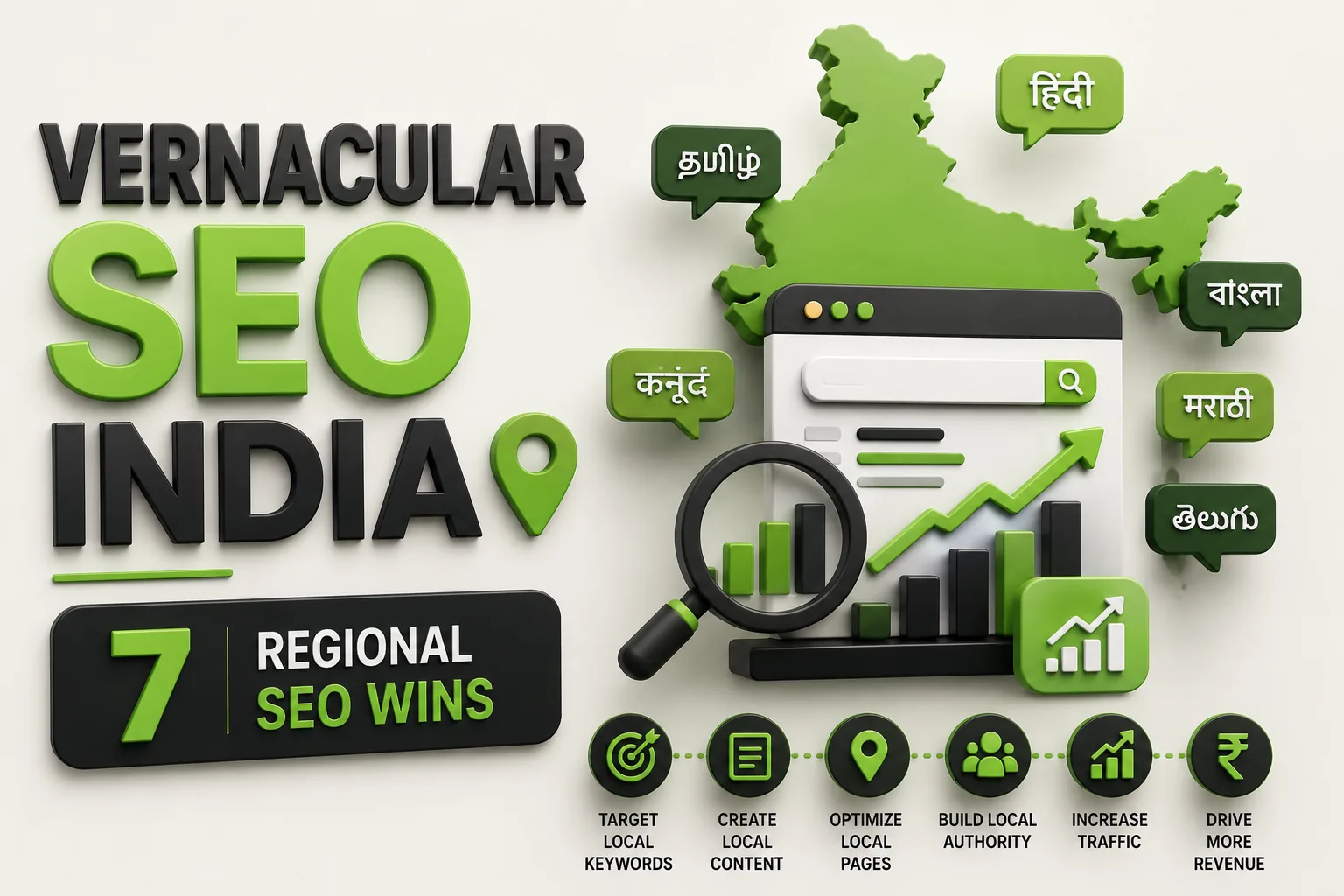
Here are 7 vernacular SEO strategies to help your business capture the next 500 million Indian internet users who prefer searching in their native language.
📊 "Near me" searches in Hindi and other Indian languages have grown by over 200% in the past two years, driven by Google Indic Keyboard and voice search adoption in Tier-2 and Tier-3 cities.
🇮🇳 DigiVeritaz builds multilingual SEO strategies for Indian businesses → digiveritaz.com/seo
1. Research Hindi and Regional Language Keywords (The Untapped Goldmine)
Start with your top-performing English keywords and find their Hindi/regional equivalents. Use Google Keyword Planner with the language filter set to Hindi, Google Trends with India region and Hindi language selected, and Google's autocomplete suggestions in Hindi (type using Google Indic Keyboard). You'll discover that many Hindi keywords have substantial search volume with difficulty scores of 0–10 (compared to 40–80 for their English equivalents). For example, "डिजिटल मार्केटिंग क्या है" (What is digital marketing in Hindi) has significant volume with almost no competition.
2. Create Dedicated Hindi/Regional Language Pages (Not Just Translations)
Don't just machine-translate your English content. Create original, culturally relevant content in the target language. Machine translations miss cultural context, local idioms, and natural phrasing that native speakers expect. Hire native-language content writers who understand both the language nuances and your industry. Each vernacular page should be genuinely useful to someone searching in that language, not a word-for-word conversion of your English page.
3. Implement Proper Hreflang Tags and URL Structure
Use hreflang tags to tell Google which language version of a page to show to which users. Choose a URL structure: subdirectories (example.com/hi/ for Hindi) are the most manageable for most businesses. Alternatively, use subdomains (hi.example.com) or separate country-code domains. Ensure every page has proper hreflang annotations pointing to all language versions, including a self-referencing tag. Without correct hreflang implementation, Google may show the wrong language version to users.
4. Optimize for Hinglish (Mixed Hindi-English) Search Queries
Millions of Indian users search in "Hinglish" — a mix of Hindi words written in English script. Queries like "best digital marketing course kaise karein," "SEO kya hota hai," and "online business ideas Hindi mein" represent massive search volume that pure Hindi or pure English optimization misses entirely. Create content that naturally includes Hinglish phrases. Use transliterated Hindi terms alongside Devanagari script to capture both search patterns.
5. Optimize for Voice Search in Regional Languages
Over half of Indian users now use voice commands for daily tasks, and voice search defaults to the user's device language. Optimize for conversational, question-based queries in Hindi and regional languages. Voice queries are longer and more conversational than typed queries. Example: a typed search might be "SEO services Mumbai" but a voice search would be "Mumbai mein acchi SEO company kaun si hai?" Structure content with FAQ sections and conversational H2/H3 headings in regional languages.
6. Build Regional Language Backlinks and Citations
Earn backlinks from Hindi and regional language websites, blogs, news portals, and directories. Submit your site to regional-language business directories. Contribute guest articles to popular Hindi blogs in your industry. These regional-language backlinks signal to Google that your content is genuinely relevant to Hindi-speaking audiences, not just a translated afterthought.
7. Track Vernacular SEO Performance Separately
In GA4, create segments for Hindi/regional language page traffic. Track: organic traffic by language page, keyword rankings for vernacular terms (use SEMrush or Ahrefs with Hindi keyword tracking), conversion rates from vernacular pages vs. English pages, and geographic distribution of vernacular traffic (you'll likely see strong Tier-2 and Tier-3 city representation). Report these metrics separately from your English SEO performance to demonstrate the incremental value of vernacular investment.
Frequently Asked Questions
Is multilingual SEO worth it for Indian businesses?
Yes. With 73% of Indian internet users preferring regional languages and near-zero competition for vernacular keywords, multilingual SEO offers the highest ROI of any SEO investment for businesses targeting pan-India audiences.
How do I do SEO in Hindi?
Research Hindi keywords using Google Keyword Planner with the Hindi language filter. Create original Hindi content (not machine translations). Implement hreflang tags. Optimize for both Devanagari script and Hinglish (transliterated) queries. Build Hindi-language backlinks.
Which CMS is best for multilingual websites in India?
WordPress with WPML or Polylang plugins is the most popular and cost-effective option. For larger sites, Drupal offers robust multilingual support natively. Ensure your chosen CMS properly supports Devanagari and other Indian scripts with correct Unicode encoding.
How do I rank for Hindi keywords on Google?
Create high-quality original content in Hindi (not translated), optimize titles and meta descriptions in Hindi, use proper hreflang tags, build backlinks from Hindi-language websites, and optimize for voice search queries in Hindi.
Which Indian languages should I prioritize for SEO?
Hindi first (largest internet user base), then choose based on your business geography: Tamil, Telugu, and Kannada for South India; Marathi for Maharashtra; Bengali for West Bengal and Bangladesh traffic; Gujarati for Gujarat. Prioritize 1–2 languages initially and expand based on results.