
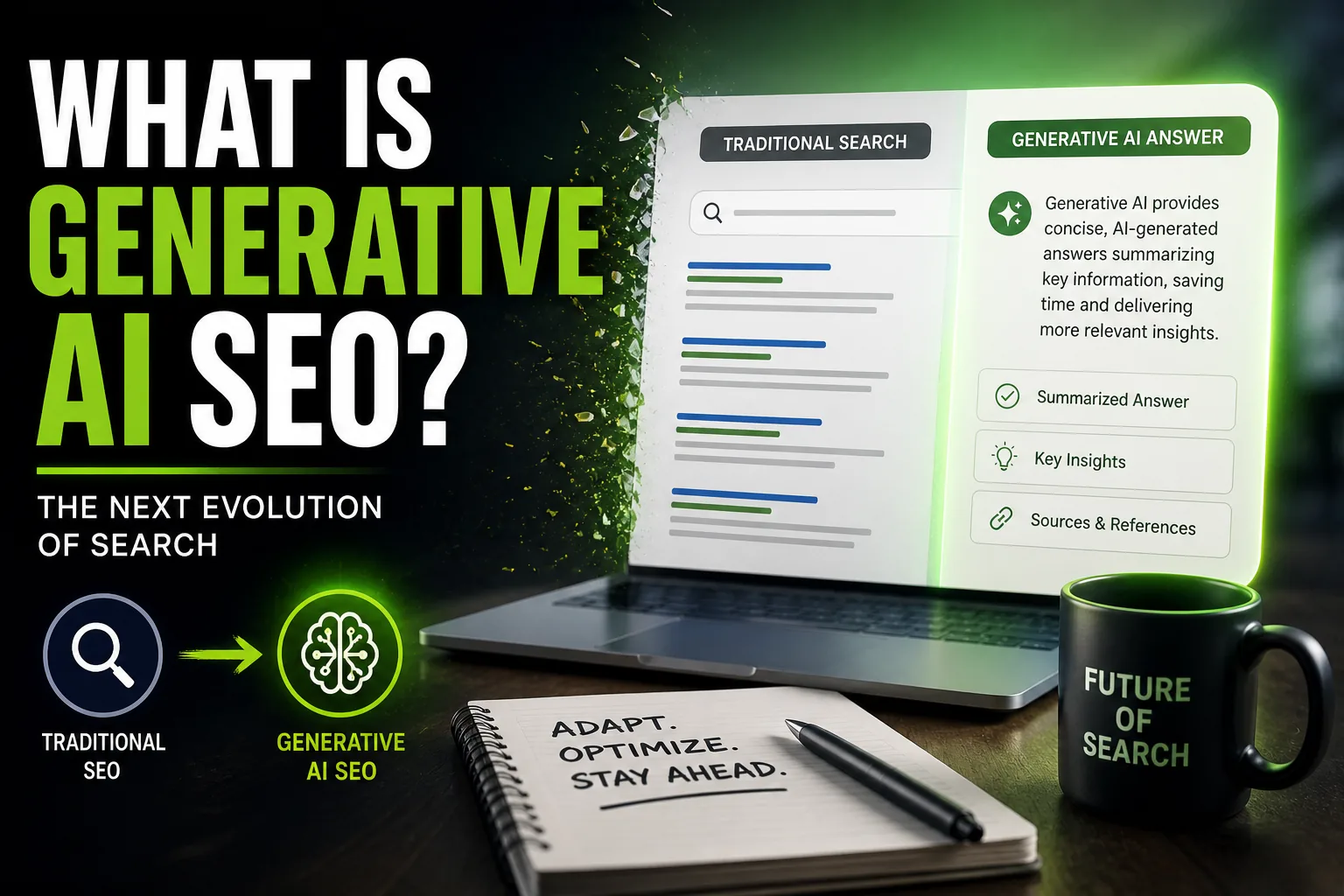
Generative AI SEO is the practice of optimising your content to appear in AI-generated responses — not just traditional search results.
Tools like Google's AI Overviews, ChatGPT, and Perplexity now answer search queries directly. If your content is not optimised for these systems, you are invisible to a growing share of users.
How It Differs from Traditional SEO
| Traditional SEO | Generative AI SEO |
|---|---|
| Targets blue-link rankings | Targets AI-generated answers |
| Focus on keywords | Focus on topics and authority |
| Backlinks = trust signal | Expertise and citations = trust |
| Ranks pages | Surfaces facts and summaries |
| Click-through rate matters | Brand mentions in answers matter |
Why Generative AI SEO Matters Right Now
AI-generated answers now appear at the top of Google for millions of queries. If your brand is not cited in those answers, competitors who are will get the traffic.
What You Need to Know
🤖 Google's AI Overviews appear for over 25% of search queries
📉 Pages not cited in AI answers see up to 60% lower click-through rates
✅ Structured, factual, expert content is most likely to be cited by AI
How to Optimise for Generative AI SEO
- Write clear, factual content that directly answers user questions
- Use structured data (schema markup) to help AI understand your pages
- Build topical authority by covering subjects in-depth
- Get cited by reputable sources and publications
- Use question-and-answer formats that match how AI reads content
- Keep content updated; AI prioritises fresh, accurate information
Key Generative AI SEO Strategies for 2026
- Entity optimisation — make your brand a recognised entity in AI models
- E-E-A-T alignment — demonstrate Experience, Expertise, Authority, Trust
- Conversational content — write the way users ask questions
- Snippet-ready formatting — short answers followed by detailed context