
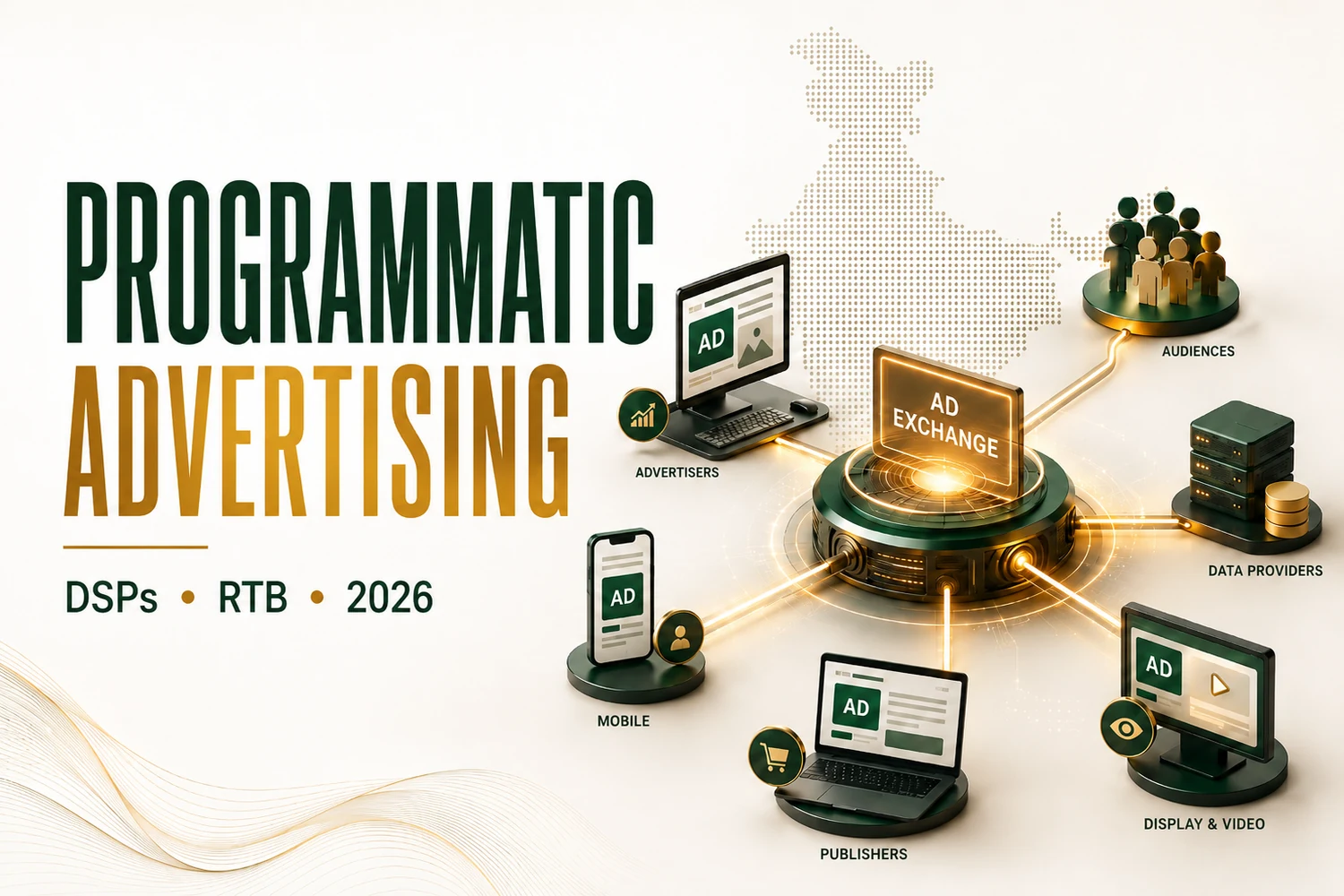
Programmatic advertising sounds intimidating, wrapped in acronyms like DSP, SSP, and RTB, but the core idea is simple: it is the automated buying and selling of digital ad space in real time. Instead of negotiating placements by hand, software buys the right impression for the right person in milliseconds. For Indian advertisers, programmatic unlocks precision and scale that manual buying cannot match. This beginner's guide demystifies the moving parts and shows how to start, building on the same foundations we use in display advertising.
What programmatic advertising actually is
At its heart, programmatic advertising uses technology to automate the purchase of digital ad inventory. Rather than a salesperson booking a banner slot for a month, algorithms evaluate each individual impression as it becomes available and decide, in real time, whether it is worth bidding on for a given advertiser. This shift from buying space in bulk to buying audiences one impression at a time is what makes programmatic so powerful, and it is why it now underpins a large share of digital display, video, and even audio advertising in India.
Understanding the DSP
A demand-side platform, or DSP, is the tool advertisers use to buy programmatic inventory. It is your control panel: you set your targeting, budgets, and bidding rules, and the DSP bids on impressions across thousands of sites and apps on your behalf. Think of it as the buyer's cockpit, translating your campaign strategy into millions of automated bidding decisions. Choosing and configuring a DSP well is one of the most important early steps in any programmatic effort.
Understanding the SSP
On the other side sits the supply-side platform, or SSP, which publishers use to sell their ad space. Where the DSP represents advertisers wanting to buy, the SSP represents websites and apps wanting to sell, working to fill their inventory at the best possible price. DSPs and SSPs connect through ad exchanges, creating a vast automated marketplace where buyers and sellers meet impression by impression, without any direct human negotiation.
How real-time bidding works
Real-time bidding, or RTB, is the auction that happens in the moment a page or app loads. In the fraction of a second before an ad appears, an auction runs: multiple advertisers, through their DSPs, bid on that specific impression based on who the user is and how valuable they are. The highest relevant bid wins, and its ad is served, all before the user notices any delay. This millisecond auction, repeated billions of times a day, is the engine of programmatic.
The role of data and audiences
Programmatic is only as good as the data guiding it. Audience data, from your own first-party sources and from platform signals, tells the DSP which impressions are worth pursuing. In 2026, with privacy rules tightening, first-party data and contextual targeting have grown more important, while reliance on third-party cookies has faded. For Indian advertisers, building and feeding clean audience data into the DSP is what turns raw automation into precise, efficient reach.
Why programmatic suits Indian advertisers
India's vast, fragmented digital audience is exactly the kind of environment where programmatic shines. It lets you reach specific segments across a huge range of sites and apps efficiently, with granular control over budget and frequency, and with transparent, measurable results. Rather than betting a fixed sum on a single publisher, you spread intelligent, data-driven bids across the whole open web, concentrating spend wherever your audience actually is at any given moment.
Common pitfalls to avoid
Beginners often stumble in predictable ways: buying cheap inventory that never converts, neglecting brand-safety controls, or setting frequency caps too loosely so the same person sees an ad dozens of times. Poor measurement is another trap, spending without tracking real outcomes. Approaching programmatic with clear goals, sensible guardrails, and honest conversion tracking avoids these expensive early mistakes and keeps automation working in your favour rather than against your budget.
How to get started sensibly
You do not need an enormous budget to begin, but you do need structure. Start with clear objectives, clean audience data, a well-chosen DSP, and strict brand-safety and frequency settings, then test on a modest budget and scale what works. Many Indian advertisers begin with the guidance of a specialist team rather than navigating the complexity alone. This measured, data-led start is central to how we approach performance marketing for clients new to programmatic.
The DigiVeritaz takeaway
Programmatic advertising is not magic, and it is not only for giant brands; it is simply a smarter, faster way to buy digital ads, powered by automation and data. Understand the DSP, the SSP, and the real-time auction between them, feed the system good data, and set sensible guardrails, and it becomes a precise, scalable channel for Indian businesses of almost any size. As a digital marketing agency in India with a 4–10x ROI record, DigiVeritaz helps advertisers enter programmatic with the strategy and controls that turn its complexity into a genuine advantage.