
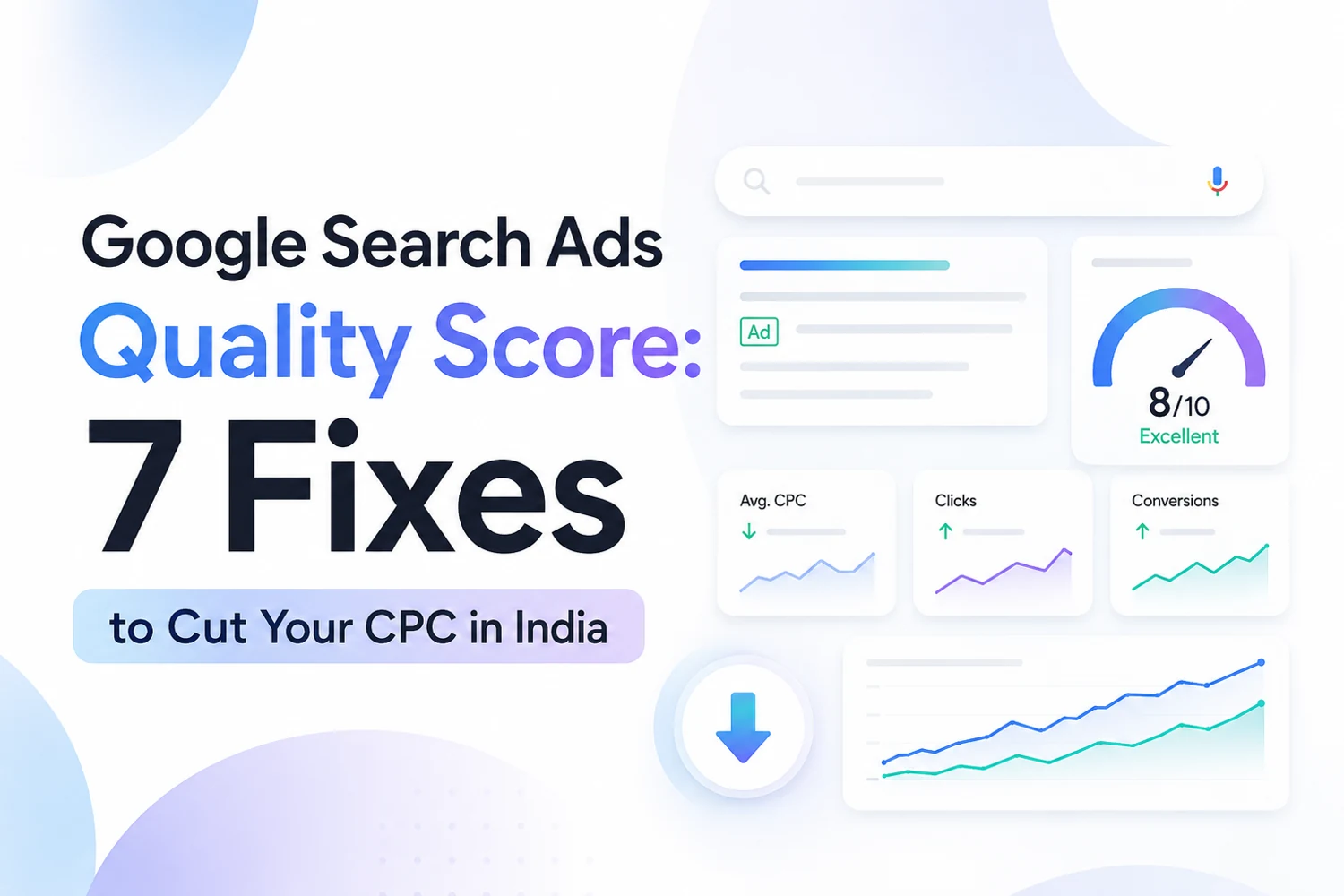
Quality Score is Google's rating of how relevant and useful your ad is, scored from one to ten across three inputs: expected click-through rate, ad relevance, and landing page experience. It matters for one simple, powerful reason: a higher score wins better ad positions at a lower cost per click. In India's crowded auctions, a strong Quality Score can hand you the same placement as a rival paying significantly more per click. Treating it as a core lever rather than a background metric is one of the fastest ways to stretch a paid budget. Here are seven fixes to lift yours, drawn from the same playbook we use across our PPC services.
1. Tighten your ad groups
Sprawling ad groups stuffed with dozens of loosely related keywords drag down relevance, because no single ad can speak convincingly to all of them. Break them into tight, tightly-themed groups where every keyword shares clear intent, and write ads that address that intent directly. When the ad matches the search closely, expected click-through rate rises, and Quality Score rises with it. This structural discipline is unglamorous but delivers some of the biggest CPC reductions available.
2. Write responsive search ads that earn clicks
Expected click-through rate is a central Quality Score input, and it is driven by how compelling your ad is. Give Google multiple strong headlines and descriptions to test, pin your primary keyword into at least one headline, and lead with the benefit an Indian buyer actually cares about, whether that is price, speed, warranty, or trust. Ads that promise a clear, relevant outcome earn more clicks, and higher click-through steadily pulls your Quality Score upward.
3. Match the landing page to the promise
Landing page experience is roughly a third of the score, and it is where many otherwise-strong accounts lose points. The page must load fast on a mid-range Indian smartphone, echo the keyword and promise from the ad, and make the next step obvious. A visitor who lands and immediately sees what they searched for stays and converts; one who lands on a slow, generic page bounces. Well-structured, SEO-friendly landing pages lift Quality Score and conversion rate at the same time, giving you two wins from one fix.
4. Put the keyword where it counts
When the search term appears in your headline and again on the landing page, Google sees a clean, unambiguous match between query, ad, and destination. This simple alignment often nudges a keyword from a Quality Score of five to a seven, and that jump alone can cut CPC noticeably. Audit your top-spending keywords and make sure each one is genuinely reflected in both the ad copy and the page it points to.
5. Use negative keywords to protect relevance
Every irrelevant impression drags expected click-through rate down, because people see your ad and do not click. A disciplined, regularly updated negative keyword list keeps your ads in front of the right searches only, which protects both relevance and Quality Score. In India, where broad terms attract a lot of tangential and free-intent traffic, negatives are as much a Quality Score tool as a budget one.
6. Be deliberate with match types
Broad match used without smart bidding and a solid negative list invites a flood of junk traffic that quietly erodes your scores. Blend exact and phrase match for control over the searches that matter, and let broad match explore only where conversion tracking and automated bidding can keep it honest. Matching your match-type strategy to your data maturity keeps irrelevant impressions down and Quality Score up.
Make it an ongoing habit
Quality Score is not a set-and-forget metric; it drifts as auctions, competitors, and your own account evolve. Add the keyword-level Quality Score columns to your reporting and review them regularly, watching for terms that slip so you can act before they inflate your costs. Small, consistent maintenance — refreshing ad copy, tightening groups, and pruning weak keywords — compounds into a durable cost-per-click advantage over time. The accounts with the lowest costs are almost always the ones whose owners treat Quality Score as a living number to manage, not a report to glance at once a quarter.
7. Prune the dead weight
Low Quality Score keywords that never convert quietly raise your account's average costs and drag down the terms that do work. Identify them, then pause or rebuild them into better-aligned ad groups. A cleaner, higher-relevance account signals to Google that your ads deserve cheaper clicks, and that benefit compounds over time. This ongoing hygiene is a standing task in disciplined performance marketing, not a one-off cleanup.
The DigiVeritaz takeaway
Quality Score is not a vanity number; it is a direct, ongoing discount on every click you buy. Work through these seven fixes and most Indian accounts see cost per click fall while ad positions improve, an unusually favourable trade. The advertisers who win in competitive auctions are rarely the ones with the biggest budgets; they are the ones with the most relevant accounts. With 15+ years of combined experience and a 4–10x ROI track record, DigiVeritaz treats Quality Score as one of the highest-leverage levers in paid search.