
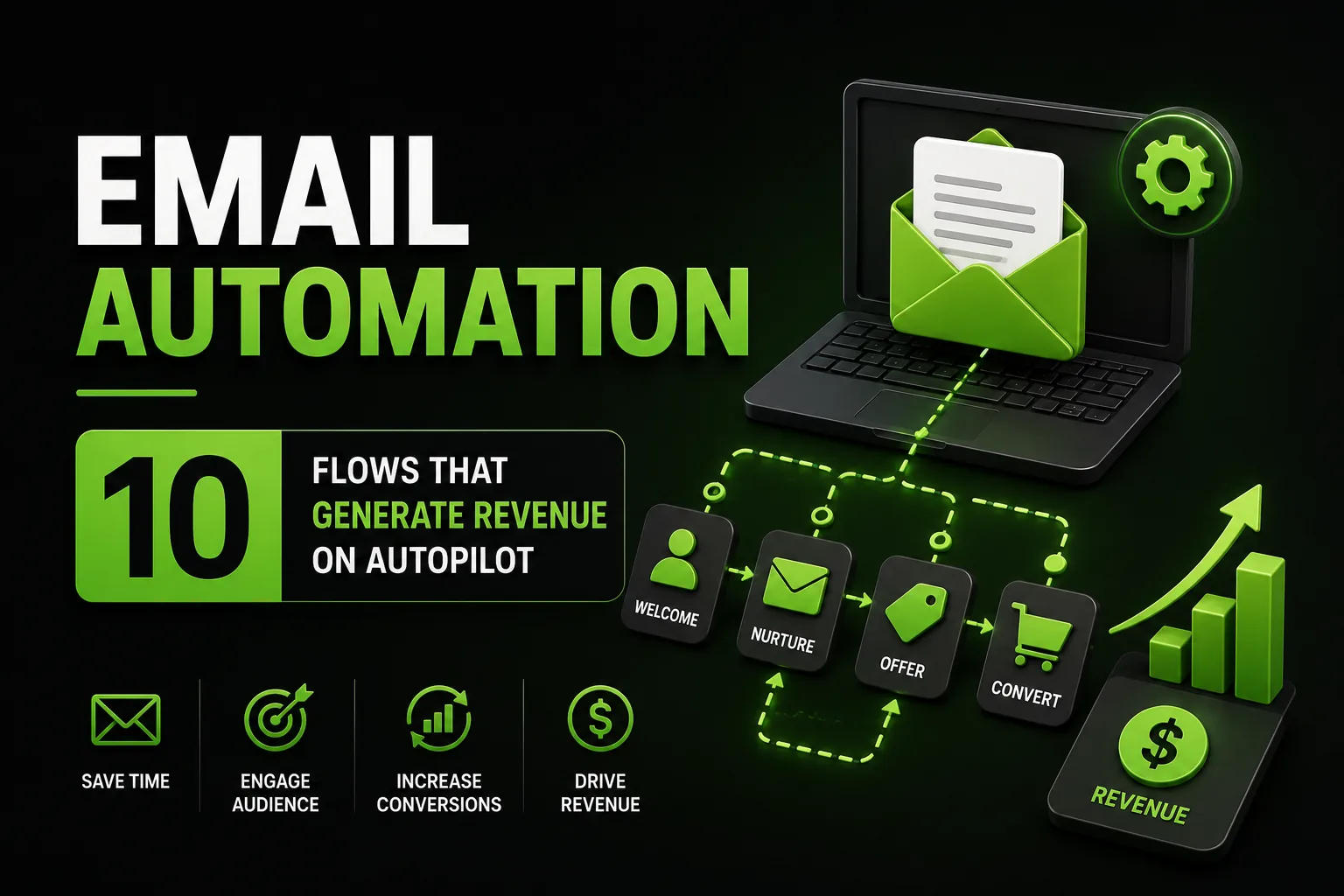
Email marketing automation delivers the highest ROI of any marketing channel — ₹280 for every ₹7 spent on average. Yet most Indian businesses either blast generic newsletters to their entire list or ignore email entirely in favour of newer channels like WhatsApp marketing.
The secret isn't sending more emails. It's setting up automated email campaigns that trigger based on customer behaviour — and then generate revenue while you sleep. Once configured, these email automation flows run 24/7 without manual intervention. Here are 10 flows that consistently generate revenue on autopilot.
✉️ DigiVeritaz builds automated marketing systems → digiveritaz.com/performance-marketing-agency
1. Welcome Series (3-Email Onboarding Sequence)
Trigger: new subscriber or account creation.
- Email 1 (immediate): welcome message, set expectations, deliver the promised lead magnet.
- Email 2 (Day 2): share your best content or bestselling product with social proof.
- Email 3 (Day 4): CTA for first purchase or consultation with an exclusive new-subscriber offer.
Welcome sequences generate 3× more revenue per email than regular promotions because engagement is highest in the first 48 hours after signup.
2. Abandoned Cart Recovery (3-Email Sequence)
Trigger: item added to cart but checkout not completed.
- Email 1 (1 hour after): reminder with product image and a direct checkout link.
- Email 2 (24 hours): address objections — free returns, money-back guarantee, customer reviews.
- Email 3 (48 hours): urgency-based final offer — limited stock, a small discount or free shipping.
Abandoned cart emails recover 5–15% of lost revenue on average. For an ecommerce store doing ₹20L/month, that is ₹1–3L recovered every month on autopilot.
3. Post-Purchase Follow-Up and Review Request
Trigger: order delivered (or 3–5 days after purchase).
- Email 1 (delivery day): thank you + usage tips + care instructions.
- Email 2 (Day 5): ask for a product review with a direct review link.
- Email 3 (Day 14): cross-sell related products based on their purchase.
This flow builds loyalty, generates reviews (social proof), and increases repeat purchase rates at the same time.
4. Browse Abandonment Sequence
Trigger: visitor viewed a product or service page but didn't add to cart or inquire.
- Email 1 (2 hours): "Still interested in [product]?" with an image and a link back.
- Email 2 (24 hours): social proof for that product category — reviews, a bestseller badge.
This flow captures visitors who showed purchase intent but weren't ready to commit. It converts at 2–5% and recovers revenue that would otherwise be lost completely.
5. Win-Back Campaign (Re-Engage Dormant Subscribers)
Trigger: no purchase or engagement in 60–90 days.
- Email 1: "We miss you" with a comeback incentive — a discount or free shipping.
- Email 2 (3 days later): highlight what's new since they last visited.
- Email 3 (7 days): a final offer with an expiration date.
If there's no engagement after three emails, move the subscriber to a suppression list to protect your sender reputation. Win-back flows reactivate 5–15% of dormant subscribers.
6. Lead Nurturing Drip (B2B / Services)
Trigger: lead magnet download or form submission that doesn't convert to a consultation.
Run a sequence over 2–4 weeks:
- Educational content — blog posts and guides
- Case studies that demonstrate results
- Industry insights and frameworks
- A soft CTA for a consultation or demo
This flow keeps your brand top-of-mind during the consideration phase without aggressive selling. B2B nurture sequences increase lead-to-opportunity conversion by 20–40%.
7. Upsell and Cross-Sell Automation
Trigger: purchase of Product A.
Automatically recommend a complementary Product B, 7–14 days after purchase, using customer data from your CRM to personalise the recommendation. For example:
- Bought running shoes → recommend running socks.
- Bought an SEO service → recommend a content marketing add-on.
Upsell emails generate 10–30% of total email revenue for ecommerce businesses.
8. Birthday and Anniversary Emails
Trigger: customer birthday or purchase anniversary.
Send a personalised offer — an exclusive discount, free gift or loyalty reward — on their special day. Birthday emails have 481% higher transaction rates than regular promotional emails because they feel personal and exclusive. Collect birthday data in your signup forms to enable this flow.
9. Re-Permission Campaign (List Hygiene)
Trigger: subscriber hasn't opened any email in 120+ days.
Send a final "Do you still want to hear from us?" email with a clear re-subscribe button, then remove non-responders after 7 days. This protects your sender reputation, improves deliverability for engaged subscribers, and reduces email costs.
10. Event and Webinar Follow-Up Sequence
Trigger: webinar registration or event attendance.
- Pre-event: reminder sequence (24 hours and 1 hour before).
- Post-event (immediate): recording link + resources.
- Post-event (Day 2): key takeaways + related content.
- Post-event (Day 5): CTA for a consultation or next step.
This flow maximises the value of every event by continuing the conversation well beyond the live session.
Frequently Asked Questions
What is the best email marketing tool for Indian businesses?
Mailchimp, Sendinblue (Brevo), and Zoho Campaigns are the most popular for Indian SMBs. For ecommerce, Klaviyo offers the best automation features. Choose based on your list size, automation complexity, and budget.
How many automated email flows should I set up?
Start with the top three highest-impact flows: Welcome Series, Abandoned Cart Recovery, and Post-Purchase Follow-Up. These three alone can generate 20–40% of your total email revenue. Add more flows once the fundamentals are working.
Email marketing vs WhatsApp marketing: which is better?
Use both for different purposes. Email excels at long-form content, newsletters, and automated sequences. WhatsApp excels at time-sensitive offers, conversational commerce, and customer support. Email has a lower cost per message; WhatsApp has higher open rates.
How do I improve email open rates?
Personalise subject lines (use the recipient's name), keep subjects under 40 characters, send during peak engagement hours (10 AM and 8 PM IST), segment your list by behaviour, and clean your list regularly by removing inactive subscribers.
What is a good email conversion rate?
Average email conversion rates: 1–2% for promotional broadcasts, 3–5% for automated flows, 5–15% for abandoned cart recovery, and 10–20% for a welcome series with a first-purchase offer.