
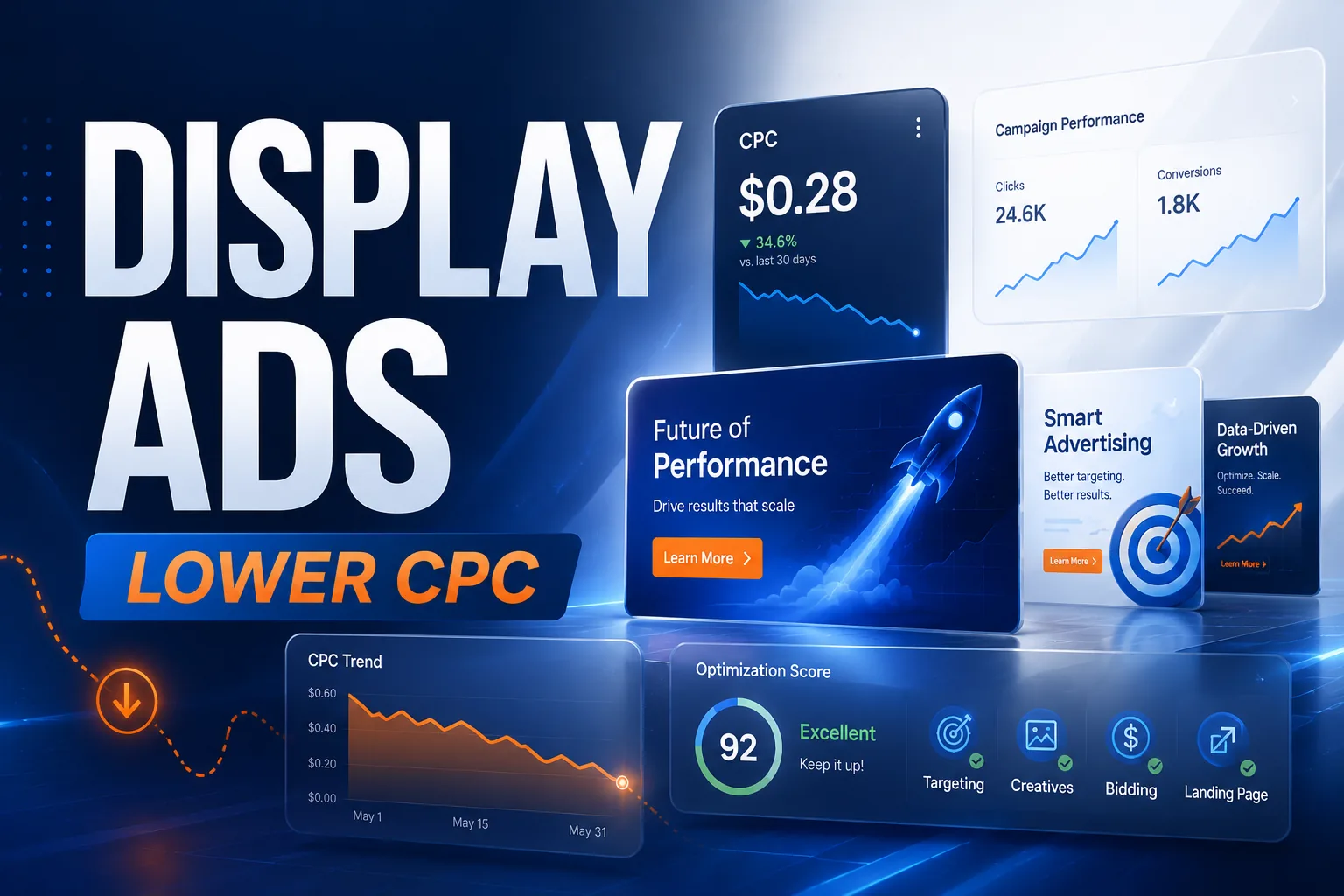
Display advertising is the most mismanaged channel in most Indian brands' digital mix. The setup is seductively simple — choose an audience, upload a banner, set a budget — and the click data arrives quickly enough that it feels like something is working. The problem is that a high volume of cheap, irrelevant clicks is not the same as performance. Most display campaigns waste 40–60% of their budget on placements, audiences, and creatives that have no realistic chance of converting.
Here are 8 tactics that DigiVeritaz's paid media team applies to cut cost per click and improve display campaign quality across Google Display Network and programmatic channels.
Why Display Advertising Fails More Often Than It Should
Display ads appear on third-party websites and apps across the Google Display Network — over 35 million sites and apps globally. The breadth is both the power and the problem. Without precise targeting and active management, your ads end up on irrelevant content, in front of the wrong audiences, at the wrong times — generating impressions and clicks that have zero conversion potential.
The solution is not to spend more. It is to apply discipline to every element of the campaign. If you are also weighing display against other formats, our guide on native advertising vs display ads breaks down where each one wins.
Tactic 1: Audience Layering
Rather than targeting a single audience signal, layer multiple signals to narrow down to your highest-value prospects. Combine in-market audiences (people actively researching your product category) with custom intent audiences (people who have searched specific keywords) and demographic filters. The overlap is smaller — but significantly more likely to convert.
Tactic 2: Exclusion Lists
Before you optimise what you target, exclude what you do not want. Add exclusion lists for existing customers (unless running upsell campaigns), irrelevant content categories (games, children's content, clickbait news), and low-quality placement categories. Proactive exclusions alone can improve campaign efficiency by 20–30%.
Tactic 3: Frequency Caps
Showing the same ad to the same person 20 times in a week does not increase conversion probability — it increases ad fatigue and banner blindness. Set frequency caps at the campaign level, typically 3–5 impressions per user per day, and monitor frequency reports weekly to identify over-exposure before it inflates your costs.
Tactic 4: Creative Rotation and A/B Testing
Most campaigns run one or two creatives and never test alternatives. Run at minimum three creative variants per ad group — varying the headline, CTA text, and hero image. Pause underperformers at the 1,000-impression mark and double down on what is working. Creative freshness also reduces ad fatigue, which directly lowers your effective CPC over time.
Tactic 5: Responsive Display Ads
Responsive Display Ads allow Google to automatically test combinations of your headlines, descriptions, and images to find the highest-performing combinations. Upload the maximum number of assets allowed — five headlines, five images, five descriptions — and let the system optimise. RDAs consistently outperform standard image ads in reach and conversion efficiency.
Tactic 6: Placement Exclusions and Manual Reviews
Google's automated placements include a significant number of low-quality sites and mobile apps that generate clicks but rarely convert. Download your placement report weekly and manually exclude sites with high impression counts and zero conversions. Build a master exclusion list over time — this becomes a proprietary campaign asset.
Tactic 7: Remarketing Segmentation
Generic remarketing — showing the same ad to everyone who visited your website — wastes budget on users who bounced in two seconds. Segment your remarketing audiences by page visited, time on site, and stage in the funnel. A visitor who spent 4 minutes on your pricing page warrants a very different ad from someone who landed on the homepage and immediately left.
Tactic 8: Time and Device Bid Adjustments
Analyse your conversion data by hour of day, day of week, and device type. If your conversions cluster between 9 AM and 6 PM on weekdays and almost never convert on mobile, apply bid adjustments accordingly — increase bids during high-conversion windows, decrease or exclude during low-conversion ones. This optimisation alone can improve ROAS by 15–25% without any other changes.
The average display campaign wastes 56% of its budget on non-viewable ads and irrelevant placements. Active placement exclusion, audience segmentation, and frequency capping — applied consistently — can cut wasted spend in half within 30 days.
Frequently Asked Questions
What is display advertising and how does it work?
Display advertising uses visual banner ads — images, animations, or video — placed across websites and apps in the Google Display Network or programmatic ad exchanges. Advertisers pay per click (CPC) or per thousand impressions (CPM), targeting users by demographics, interests, browsing behaviour, or remarketing lists.
What is a good CPC for display ads in India?
Display CPC in India typically ranges from INR 2 to INR 15 depending on industry, audience targeting, and placement quality. Well-optimised campaigns in competitive verticals like finance or education can achieve CPCs at the lower end of this range with strong targeting.
Is display advertising effective for lead generation?
Display is most effective for awareness and remarketing rather than cold lead generation. It primes prospects who then convert through search ads or direct visits. Remarketing display campaigns targeting warm audiences — website visitors and video viewers — can generate leads at competitive CPAs.
How do I reduce wasted spend on display ads?
Apply placement exclusions, audience exclusions for irrelevant segments, frequency caps to prevent ad fatigue, and dayparting to concentrate budget during high-conversion windows. Regular placement report reviews are essential — automated placements always require manual pruning.
What is the difference between display advertising and programmatic advertising?
Display advertising typically refers to Google Display Network campaigns managed through Google Ads. Programmatic advertising uses automated buying technology across multiple ad exchanges to purchase display, video, and native ad inventory in real-time — offering broader reach and more granular targeting than GDN alone.
Explore More from DigiVeritaz
- Display Advertising Services — Google Display Network and programmatic campaigns
- Google Ads Management — Search, Performance Max, and Shopping campaigns
- Performance Marketing Agency — Full-funnel paid media for measurable ROI
- Landing Page Optimisation — Convert more paid traffic into leads and sales
Conclusion
Every display campaign leaks budget somewhere — the question is how much and where. The 8 tactics in this guide address the most common and most expensive leaks: poor audience targeting, missing exclusions, ad fatigue, and single-creative campaigns. Apply them systematically and your cost per click will fall while your conversion rate rises.
DigiVeritaz's display advertising team cuts wasted spend and builds campaigns that reach the right audiences at the right cost. Book a free display campaign audit today.