
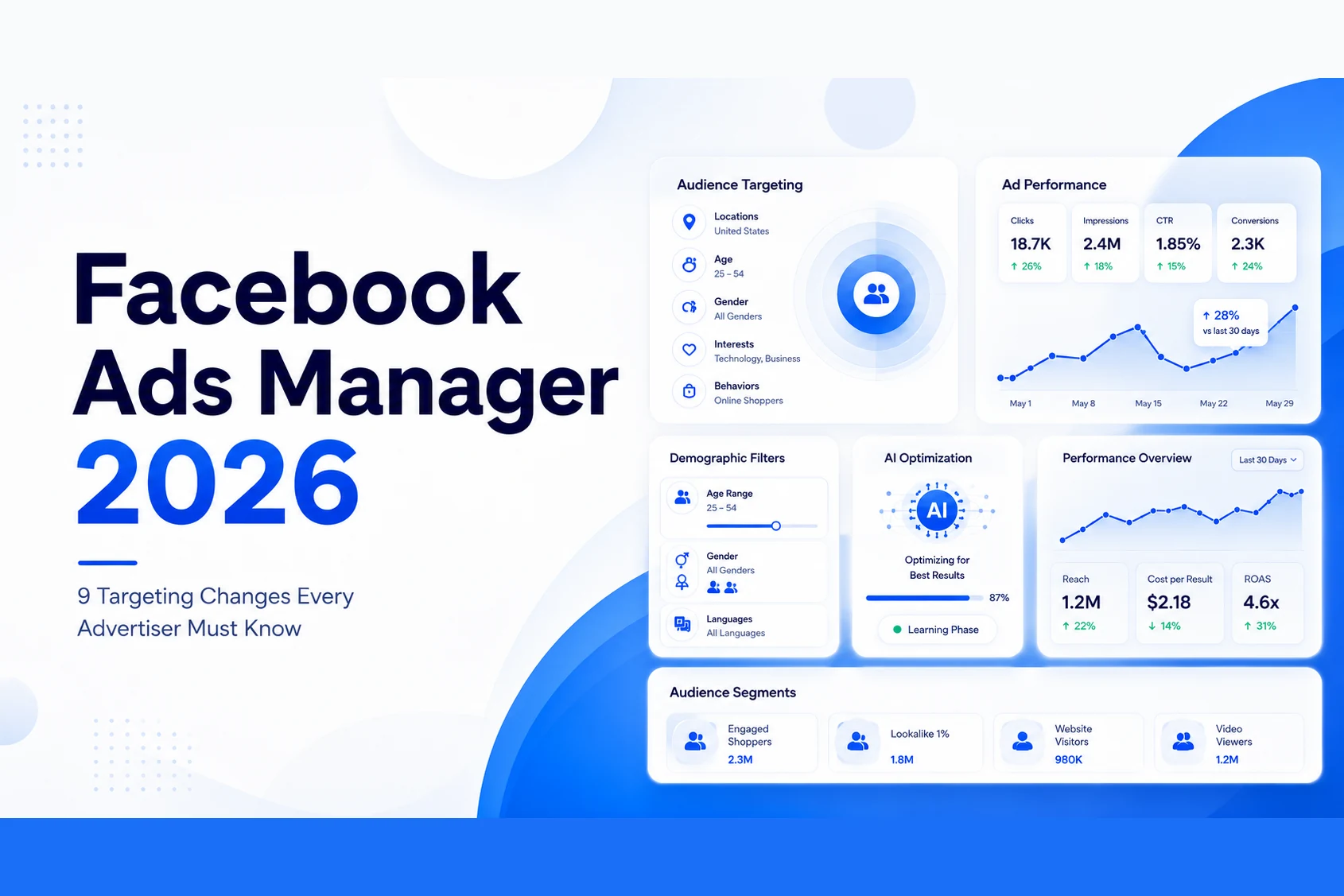
Facebook Ads Manager in 2026 looks familiar on the surface, but the way targeting works underneath has changed profoundly. Meta has leaned hard into automation, absorbed the impact of privacy-driven signal loss, and pushed advertisers toward broad reach with AI doing the finding. Marketers still building tight, manual interest stacks the way they did a few years ago are quietly falling behind and paying more for it. Understanding where the platform is heading is now essential to keeping costs down. Here are nine shifts every Indian advertiser must understand to keep paid social campaigns efficient this year.
1. Advantage+ audience is now the default
Meta increasingly defaults to its AI-driven Advantage+ audience, treating the selections you make as suggestions and signals rather than strict boundaries. Advertisers who fight this by forcing narrow control often see costs rise, while those who guide the AI with the right inputs usually see costs fall. The mental shift is from dictating exactly who sees your ad to teaching the system who your best customers look like.
2. Detailed targeting keeps shrinking
Meta has retired large swathes of granular interest and behaviour options, and this pruning has continued into 2026. Campaigns that once depended on stacking narrow interests now find those options gone or consolidated. The practical response is to stop relying on hyper-specific interests and move to a broader, signal-led structure that gives the algorithm room to work while still pointing it in the right direction.
3. Broad targeting plus strong creative wins
With the algorithm now doing most of the finding, your creative has become the real targeting lever. A scroll-stopping hook, a relatable scenario, or a clear offer now decides who Meta shows your ad to far more than any interest checkbox. In practice this means investing more in testing creative angles and less in engineering audiences, a genuine change in where the work sits for Indian advertisers.
4. Placements are automated by default
Advantage+ placements spread delivery automatically across Feed, Reels, Stories, and beyond, seeking the cheapest effective inventory. Fighting this by manually restricting placements usually fragments learning and raises costs. The better approach is to embrace automatic placements while designing creative that adapts well to each format, so your ad looks native wherever it lands.
5. First-party data is now essential
As third-party signals continue to fade, your own customer lists, purchase data, and website events have become the highest-quality inputs you can give Meta. Advertisers who collect and upload clean first-party data hold a durable, compounding edge, because they are teaching the algorithm from real customers rather than borrowed signals. Building this data asset is now a strategic priority, not an afterthought.
6. The Conversions API is non-negotiable
Browser-only pixel tracking leaks a growing share of conversions as privacy controls tighten. Server-side tracking through the Conversions API restores much of the signal Meta needs to optimise effectively, and accounts running without it consistently underperform those that do. Setting it up correctly is now a baseline requirement for competitive performance rather than an advanced tactic.
7. Lookalikes give way to AI expansion
Traditional lookalike audiences matter less than they once did, because Advantage+ custom audiences now expand automatically beyond your seed list when the system sees an opportunity. The winning move is to feed a strong, high-quality source audience and then let Meta widen it intelligently, rather than manually building and layering multiple lookalike percentages as before.
8. Engagement audiences do the retargeting
With pixel-based retargeting pools shrinking, on-platform engagement has become a reliable alternative. People who viewed your video, visited your profile, or interacted with your content form a retargeting audience that lives inside Meta's own first-party data and is therefore far less affected by browser privacy changes. Building content that earns engagement now doubles as building your retargeting pool.
9. Consent and privacy shape delivery
Consent Mode and India's tightening data expectations directly affect how much signal you are able to collect and use, which in turn affects delivery and optimisation. Compliant, well-configured tracking is now a performance issue as much as a legal one, because the cleaner and more complete your consented signal, the better Meta can optimise. Getting this right sits at the heart of modern performance marketing.
The DigiVeritaz takeaway
The through-line for 2026 is clear and consistent: stop micro-managing audiences and start feeding the machine better signals and better creative. Advertisers who make that shift reach more people for less money, while those clinging to old manual habits watch their costs climb. The platform has changed the job, and the winners are changing with it. DigiVeritaz runs paid social across 7 industries with a 4–10x ROI record, and as a digital marketing agency in India, we build campaigns around where Meta is heading, not where it has been.