
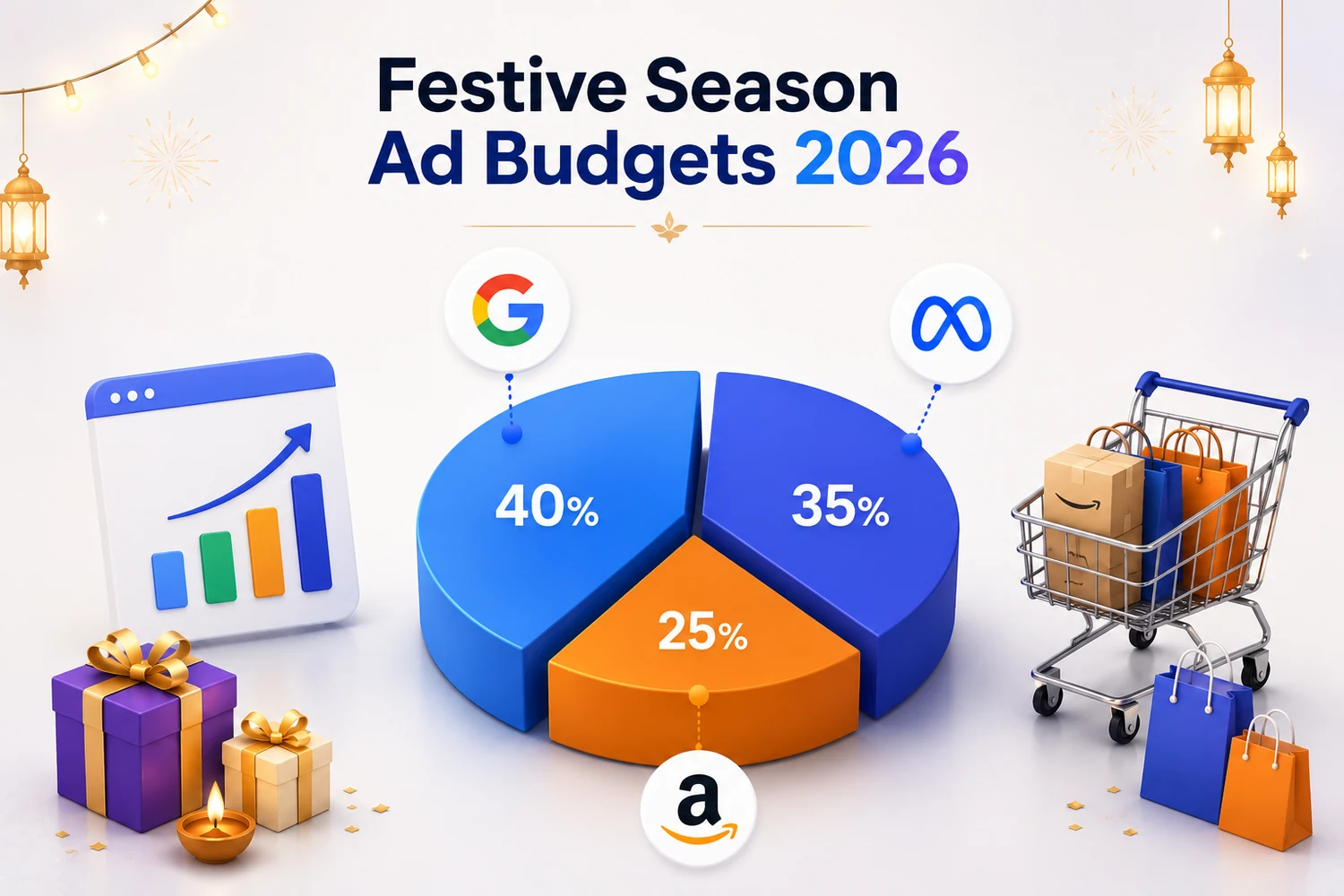
India's festive season is the single biggest sales window of the year, and how you split your ad budget across Google, Meta, and Amazon can make or break your results. Competition spikes, costs rise, and the brands that plan their allocation deliberately capture disproportionate returns, while those that spread budget randomly overspend for less. There is no single perfect split, but there is a clear way to think it through. Here is how to plan festive spend across the three platforms, based on our PPC services and marketplace work.
Start with the customer journey, not the platforms
Before allocating a single rupee, map how festive buyers actually move: discovering gift ideas, comparing options, and finally purchasing, often on a marketplace. Each platform serves a different moment, so your split should reflect where your customers spend their attention and money during the season. Anchoring the plan to the real journey, rather than to habit or last year's numbers, ensures your budget lands where it will actually influence festive purchases.
Meta for demand creation and discovery
Meta is where festive demand is created, as shoppers scroll for inspiration and gift ideas. Allocate meaningful budget here early in the season to build awareness, showcase offers through video and catalogue ads, and fill your funnel before the peak. Meta's strength in visual discovery makes it ideal for capturing the browsing, gift-hunting mindset that defines the run-up to festivals, warming audiences you will convert later on Google and Amazon.
Google for capturing high intent
As shoppers move from inspiration to decision, they search, and Google is where you capture that intent. Fund search campaigns to appear when buyers look for specific products, offers, and deals, and protect your brand terms against competitors bidding aggressively during the rush. Google typically deserves a strong share of festive budget because it captures buyers at the decisive moment, converting the demand that Meta helped create into measurable sales.
Amazon for the moment of purchase
For many festive shoppers, especially in product categories, the actual purchase happens on a marketplace. If you sell on Amazon, festive budget there is essential, because that is where intent converts into orders. Fund your Amazon campaigns to defend and grow visibility precisely when purchase intent peaks, ensuring you are not invisible at the exact moment buyers are ready to check out. Neglecting Amazon during the festive rush leaves sales on the table for competitors.
Weight the split to your business model
The right allocation depends on what you sell. A marketplace-first brand should lean heavily toward Amazon and Google intent, while a brand building its own direct audience may weight Meta and Google more. There is no universal ratio, so start from your margins, your channels, and where your customers actually buy, then adjust. The goal is a split that mirrors your real path to purchase, not a generic template.
Phase your budget across the season
Festive advertising is not one event but a build-up, a peak, and a tail. Invest earlier in awareness on Meta, ramp intent-capture on Google and Amazon as the peak approaches, and keep some budget in reserve for the final surge and post-festival demand. Phasing spend across these stages, rather than dumping it all at once, ensures you are present throughout the journey and not outbid at the moments that matter most.
Protect ROI with tracking and agility
Festive costs rise sharply, so disciplined measurement is what keeps you profitable amid the frenzy. Track performance closely across all three platforms, watch your return on ad spend daily, and be ready to shift budget quickly toward whatever is working as the season unfolds. This agility, reallocating in real time rather than setting and forgetting, is what separates a profitable festive season from an expensive one, and it is central to disciplined performance marketing.
Do not forget post-festival demand
The selling does not stop when the festival ends. Many buyers convert in the days immediately after a major festival, chasing lingering deals, using cash gifts, or completing purchases they researched during the peak. Holding a portion of budget in reserve for this tail, rather than exhausting everything before the festival day, captures demand that competitors who spent it all too early simply miss. A short, well-funded post-festival push on Google and Amazon, in particular, often delivers some of the most efficient sales of the entire season, because competition and costs ease while intent remains high.
The DigiVeritaz takeaway
There is no magic ratio for splitting festive budget across Google, Meta, and Amazon, but there is a right method: map the journey, assign each platform its role, phase your spend, and stay agile as costs and results shift. Brands that plan this way capture the festive surge profitably, while those that spread budget blindly simply pay more for the privilege of competing. DigiVeritaz plans and manages festive campaigns across search, social, and Amazon marketing with measurable, ROI-driven results for clients across 7 industries.