
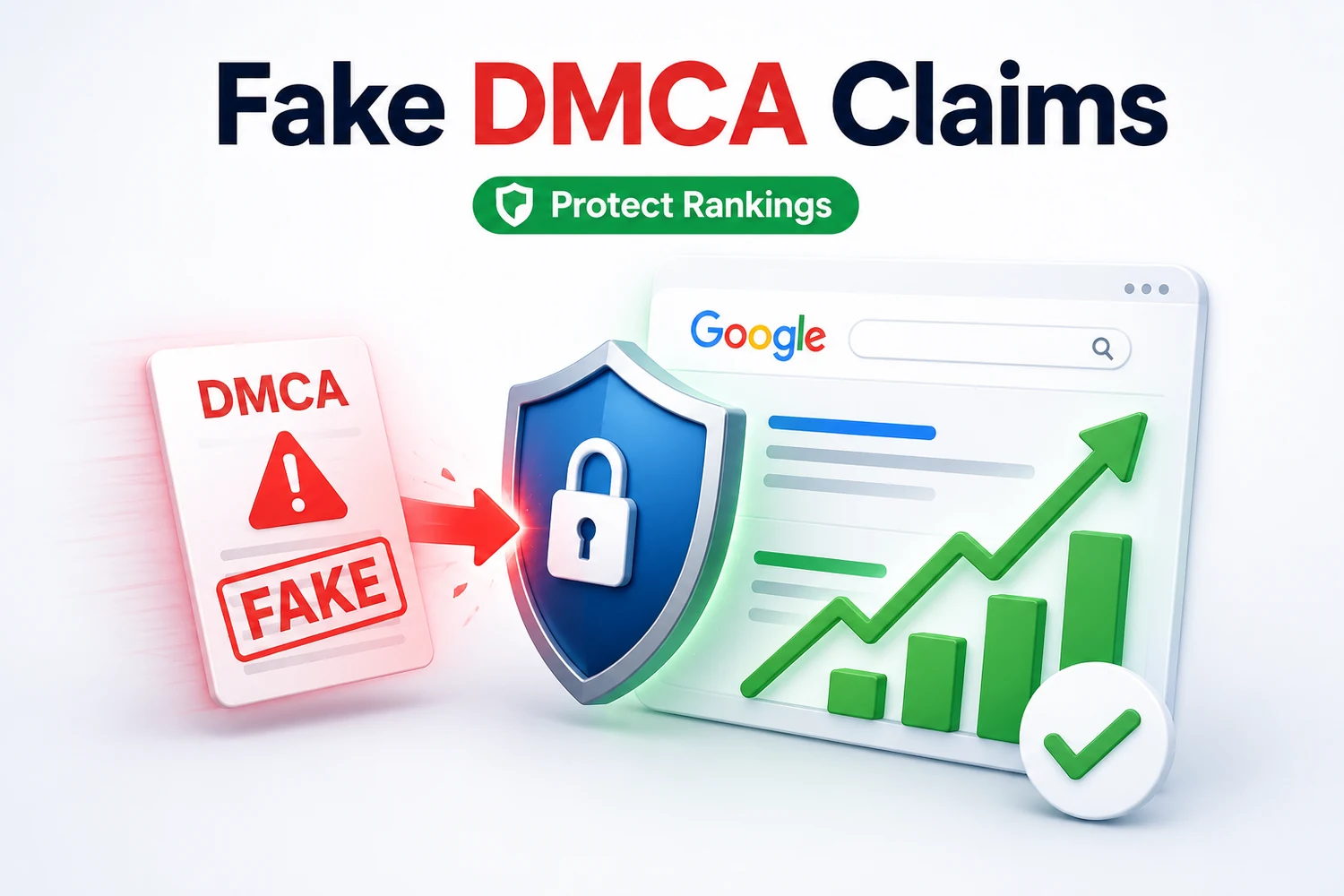
A wave of fraudulent DMCA copyright complaints is knocking legitimate pages out of Google Search — often before the platform even investigates. For Indian brands that have built organic traffic over years, a single successful fake claim can wipe out a top-ranking page and take months to reverse. Here is how the attack works, how to detect it and how to defend your rankings.
How the Attack Works
Fraudulent DMCA takedown attacks exploit the automated nature of Google's copyright complaint system. A bad actor files a takedown notice claiming your page infringes on content they own — typically alleging that your page copied theirs. Google's system, designed to move quickly on legitimate infringement, removes the target page from search results while it investigates. The investigation can take weeks. During that time, your page delivers zero organic traffic even if the claim is entirely fabricated. Attackers usually target the highest-value commercial pages of the victim — service pages, comparison pages, top-ranking blog posts — because those cause the most damage.
Who Is Being Targeted
The attacks have concentrated in three verticals: competitive service industries where organic ranking is a large part of pipeline (digital marketing, legal services, real estate, financial advisory), e-commerce categories where top rankings drive significant revenue, and personal brand sites where public visibility matters. In India, we have seen fake DMCA attacks against Mumbai-based marketing agencies, Bengaluru-based SaaS startups and Delhi-based service businesses in the past six months. The common pattern is that the target was outranking a competitor for a high-value keyword, and the attacker used a fraudulent DMCA as a low-cost, low-risk way to remove the obstacle.
How to Detect an Attack Fast
Set up monitoring for four signals. First, register your site with Google Search Console and enable email alerts for any takedown notice — this is the earliest warning you will get. Second, monitor Lumen Database, which archives DMCA takedown notices against Google, for filings that reference your domain. Third, use rank-tracking tools that alert on sudden drops in position for specific URLs; a page vanishing overnight is often a takedown, not a normal ranking fluctuation. Fourth, monitor organic traffic to your top 20 pages daily; a sudden drop to zero on a single URL is the clearest possible signal that something has been removed from the index.
How to Respond to a Fraudulent Takedown
Speed matters. First, file a counter-notification with Google immediately using the process documented in Search Console. You will need to identify the removed content, state under penalty of perjury that you have a good-faith belief it was removed in error, and provide contact information. Second, gather evidence that you are the original author — publication dates, internal drafts, timestamped emails, Google Search Console indexing data. Third, if the attacker's identity can be determined, consider legal action for fraudulent misuse of the DMCA system, which carries real penalties under both US and Indian law. Fourth, republish or refresh the affected content with a slightly modified URL as a temporary hedge while the counter-notification is processed.
How to Reduce Your Risk Before an Attack
Prevention is not fully possible — anyone can file a takedown — but you can reduce impact. Diversify your organic traffic across many ranking pages rather than concentrating it on a few big winners. Register copyright on your most valuable original content in your local jurisdiction, which creates a paper trail that supports rapid counter-notification. Maintain visible authorship, publication dates and versioning metadata on all pages so it is easy to prove originality. Build robust structured data and internal linking so that if one page is temporarily removed, related content on your site continues to rank for adjacent queries. And run quarterly SEO audits to keep your site healthy enough that a single takedown doesn't cripple your traffic. Combining these defences with a strong digital PR footprint and diversified content marketing programme makes your organic presence resilient.
Working With DigiVeritaz
DigiVeritaz has helped Indian brands respond to fraudulent DMCA takedowns, restore organic rankings and build defensive content programmes that reduce the impact of future attacks. Our team combines SEO diagnostics, legal coordination and content recovery workflows to minimise the pipeline damage from these incidents. Book a free SEO defence audit to see where your rankings are concentrated and what would happen to your traffic if a single high-value page were temporarily removed from Google.
Frequently Asked Questions
What is a fake DMCA takedown?
A fraudulent DMCA is when someone files a copyright complaint against your page falsely claiming you copied their content. Google's automated system often removes the page from search results while investigating, causing traffic loss even when the claim is baseless.
How quickly can I recover from a takedown?
Filing a counter-notification within 24 to 48 hours and providing clear evidence of original authorship typically results in reinstatement within 10 to 21 days. Some cases resolve faster; complex disputes can take longer.
Can I sue the person who filed a fake DMCA?
Yes. Fraudulent misuse of the DMCA system carries penalties under both US and Indian law. If the attacker can be identified, legal action is a legitimate remedy — though the cost typically only makes sense for repeat or high-damage cases.
Should I register copyright on my content?
For your most valuable original content, yes. Registered copyright in your local jurisdiction creates a paper trail that supports faster counter-notification and increases the legal weight of any subsequent action against the attacker.
Explore our SEO services or contact us.