
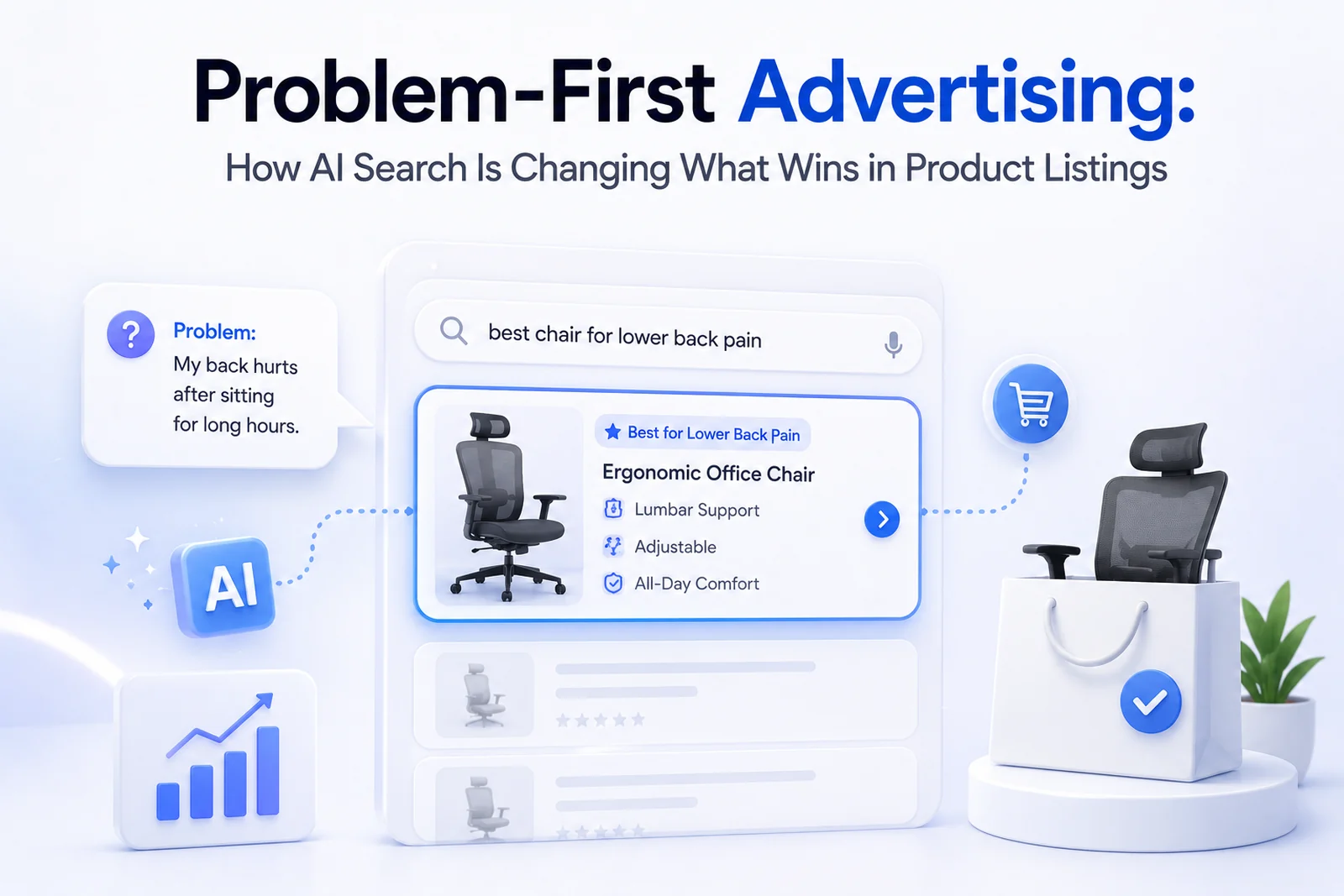
AI-powered search engines are increasingly evaluating what problem a user is actually trying to solve, rather than matching purely on product features or keywords. For advertisers, this means ads and product listings framed around customer problems now outperform those built purely around feature lists. Here is how to rework your performance marketing approach around this shift.
Why AI Search Now Prioritises Problems Over Features
AI search systems are trained to understand user intent at the level of the underlying task or problem, not just literal query terms. A search for a specific product feature is increasingly interpreted through the lens of what problem that feature is meant to solve, and search results — including ads — are evaluated partly on how directly they address that inferred problem rather than how precisely they match feature terminology.
The Gap in Most Current Product Listings
Most product listings and ad copy remain feature-first: specifications, dimensions, technical details listed in a way that assumes the customer already understands why those features matter. This approach worked well under literal keyword matching but increasingly underperforms under AI search systems that reward content directly connecting features to the problems they solve for a specific type of customer.
How to Rewrite Ad Copy Around Problems
For every product feature currently listed in your pay-per-click ad copy, identify the specific customer problem it solves and lead with that problem statement before introducing the feature as the solution. Instead of ‘12-hour battery life,’ consider framing around the problem it solves — all-day use without a mid-shift charge — before mentioning the specific battery specification as supporting proof.
Applying This to Product Listing Pages
Beyond ad copy, product and service landing pages should open with a clear statement of the problem the page addresses before diving into feature and specification detail — exactly the kind of change a focused conversion rate optimisation review would flag. This structure serves both AI search evaluation and human readers, who consistently respond better to problem-led messaging that helps them quickly confirm they have found something relevant to their actual need.
Measuring the Impact of Problem-First Messaging
Run controlled tests comparing problem-first and feature-first ad variants across the same audience and budget, tracking click-through rate, conversion rate and cost per acquisition. Most advertisers running this test see meaningful improvement in conversion rate with problem-first messaging, even when click-through rate stays similar, because the resulting clicks are better qualified against genuine intent.
Working With DigiVeritaz on Problem-First Campaigns
DigiVeritaz rebuilds ad copy and product listing content around problem-first messaging as part of comprehensive performance marketing engagements for Indian brands, aligning campaigns with how AI search systems now evaluate relevance. Book a free campaign audit to see how your current ad copy and listings would benefit from a problem-first rewrite.
Frequently Asked Questions
Does problem-first messaging work for all product categories?
It works particularly well for products solving a clear functional problem, though even premium or lifestyle products benefit from connecting features to underlying customer motivations and problems.
How do I identify the right problem statement for my product?
Review customer support queries, reviews and sales conversations for the language customers actually use to describe their problem before they knew your product existed as a solution.
Should I remove feature specifications entirely?
No. Features remain important supporting proof, but should follow the problem statement rather than lead the messaging, based on how AI search systems now evaluate relevance.
How quickly will I see results from this change?
Ad copy tests typically show measurable differences within two to four weeks of consistent traffic, depending on your campaign's existing volume.
Explore our performance marketing services in India or contact us at +91 88509 34184.