
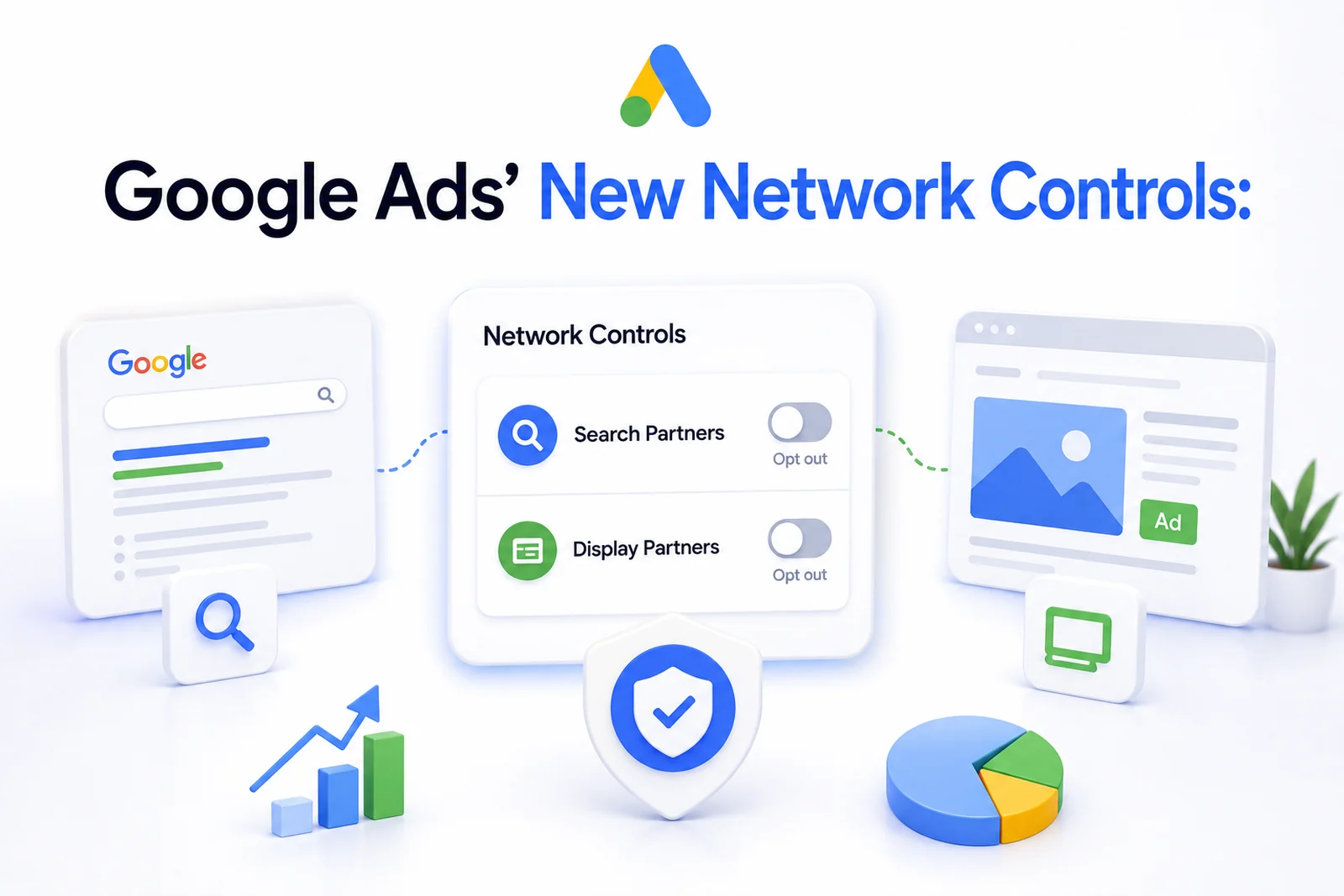
Google is testing a new control that lets advertisers choose whether their automated campaigns include Search Network partner sites and the wider Display Network, rather than including these placements automatically by default. This gives Indian advertisers a new lever for controlling ad spend efficiency. Here is how to decide whether opting out makes sense for your campaigns.
What the New Control Actually Does
Previously, automated campaign types like Performance Max and certain Search campaign configurations automatically included traffic from Google's Search Network partners and the broader Display Network, with limited advertiser visibility into how much budget those placements consumed relative to core Google Search results. The new control gives advertisers explicit choice over whether to include these placements at all.
Why Partner and Display Placements Often Underperform
Search Network partner sites and Display Network placements typically show lower conversion rates and less precise targeting than core Google Search results, because user intent on these placements is generally less immediate and comparison shopping behaviour differs. Many advertisers have unknowingly spent a meaningful share of budget on these lower-performing placements without a clear way to isolate and control that spend.
When Opting Out Makes Sense
For advertisers focused tightly on high-intent conversion — lead generation for considered purchases, e-commerce with strong margin sensitivity, or campaigns with limited budget that need to maximise efficiency on the highest-intent traffic available — opting out of partner and Display placements to concentrate spend on core Google Search often improves cost per acquisition meaningfully.
When Keeping Partner Placements Still Makes Sense
Brand awareness campaigns, businesses with strong creative assets suited to visual Display formats, and advertisers with sufficient budget to test placement-level performance before optimising may benefit from keeping partner networks included, at least initially. The right approach is testing with granular reporting rather than defaulting to exclusion without data, since partner performance genuinely varies by industry and campaign type.
How to Test This Control Properly
Run a structured split test comparing campaign performance with partner networks included versus excluded, holding all other variables constant, over a period long enough to reach statistical significance for your typical conversion volume. Track cost per acquisition, conversion rate and total conversion volume across both configurations before making a permanent decision, since the impact varies considerably by industry and target audience.
Working With DigiVeritaz on Google Ads Optimisation
DigiVeritaz tests and optimises network placement settings for Indian brands as a standard part of pay-per-click management within our broader performance marketing engagements, using granular performance data rather than platform defaults to determine the right configuration for each account. Book a free Google Ads audit to see whether your current campaigns are carrying inefficient partner or Display Network spend that this new control could help eliminate.
Frequently Asked Questions
Is this network control available to all advertisers now?
Google is currently testing this feature, meaning availability may vary by account and region during the rollout phase before broader general availability.
Will opting out reduce my total ad reach significantly?
It depends on your industry and current partner network spend share. Testing with granular reporting is the reliable way to understand the actual reach and performance impact for your specific account.
Does this apply to Performance Max campaigns?
The control is particularly relevant for Performance Max and other automated campaign types, which have historically included partner and Display placements with limited advertiser visibility.
How long should I run a placement test before deciding?
Run the test long enough to reach statistically meaningful conversion volume for your typical traffic levels, often three to four weeks for most mid-market accounts.
Explore our Google Ads services in India or contact us at +91 88509 34184.