
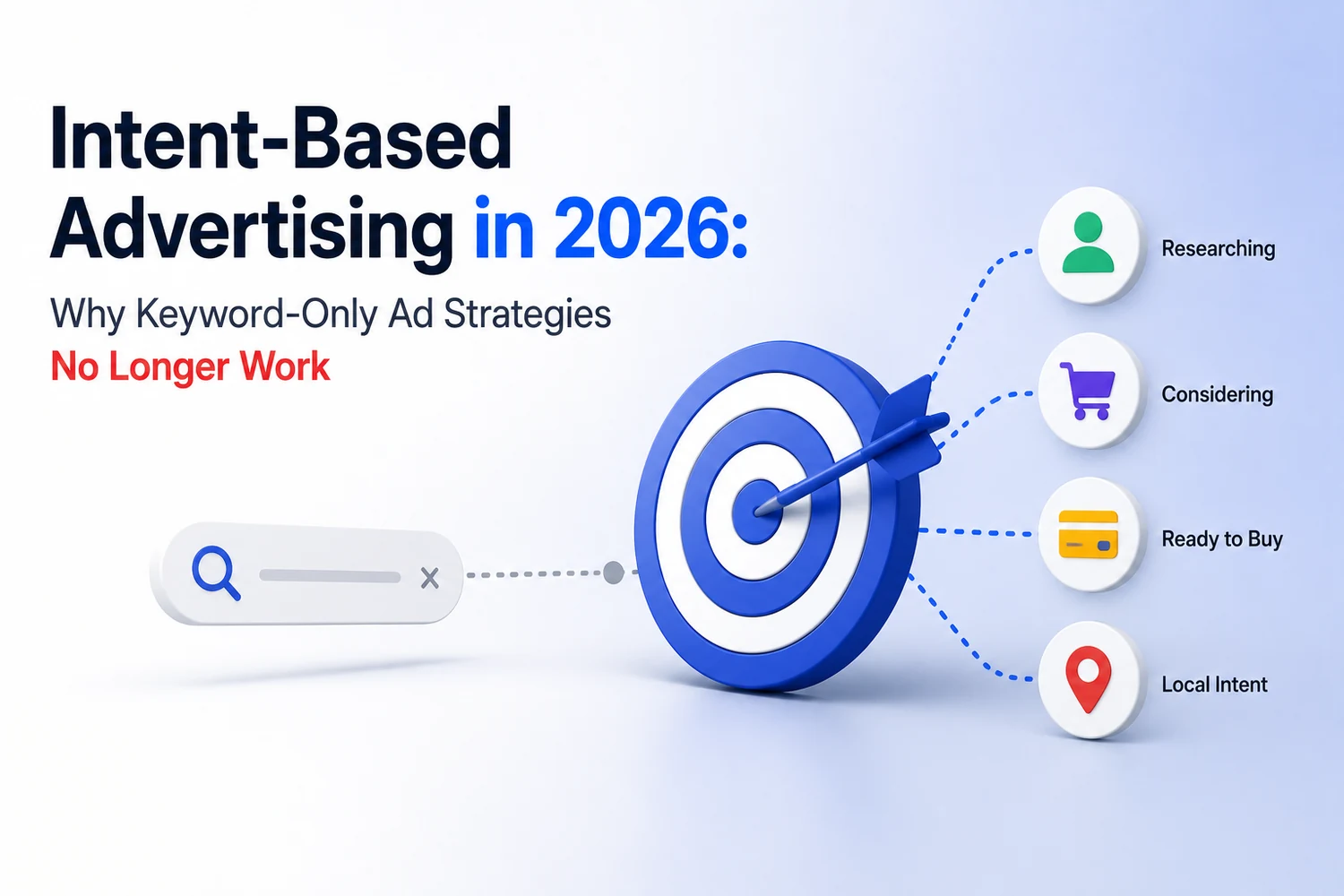
AI systems inside Google Ads and Meta now match ads to what a user is trying to accomplish, not just the exact words they typed. This makes keyword-only bidding strategies increasingly obsolete. Here is how intent-based advertising works in 2026 and what a modern pay-per-click approach looks like for Indian advertisers.
What Changed: From Keywords to Intent
Traditional PPC matched ads to search queries using exact, phrase or broad match logic tied closely to specific words. AI-driven ad platforms now interpret the underlying task or goal behind a query — recognising that ‘best running shoes for flat feet’ and ‘shoes for overpronation’ reflect the same buying intent even though they share almost no keywords. Ad systems increasingly surface your ads based on this semantic understanding rather than literal keyword overlap alone.
Why Keyword-Only Strategies Now Underperform
Accounts still built on narrow exact-match keyword lists with tight negative keyword controls are increasingly missing valid intent matches that the algorithm would otherwise capture. Overly restrictive keyword strategies that made sense five years ago now actively suppress reach because they fight against how the platform's intent-matching actually works. The result is advertisers paying more per click for a shrinking pool of literal keyword matches while intent-based competitors capture broader qualified demand.
What Intent-Based Campaign Structure Looks Like
Modern pay-per-click campaigns organise around customer problems and use cases rather than narrow keyword clusters. Ad groups reflect buyer intent stages — awareness, comparison, ready-to-buy — with creative and landing pages matched to each stage. Broad match paired with strong negative keyword hygiene and Smart Bidding, rather than narrow exact match, typically captures more qualified volume under intent-based systems while maintaining efficiency.
The Role of Landing Pages in Intent Matching
As ad platforms match on intent rather than literal keywords, landing page relevance becomes more important, not less. Quality Score and ad rank algorithms evaluate whether your landing page genuinely serves the inferred intent behind the click. Generic landing pages that do not address the specific problem a user was trying to solve will see declining Quality Score and rising costs even with strong ad copy, which is exactly where a structured conversion rate optimisation review earns back the wasted spend.
Adapting Your Measurement Framework
Intent-based advertising requires broader measurement than keyword-level performance alone. Track conversion rate and cost per acquisition by campaign theme and audience segment rather than obsessing over individual keyword performance, which matters less under intent-matching systems. Indian businesses working with a performance marketing agency should expect reporting frameworks that reflect this shift rather than legacy keyword-level dashboards that no longer capture the full picture.
Building an Intent-First PPC Programme
Rebuilding a keyword-only account for intent-based advertising typically involves consolidating overly granular ad groups, expanding match types strategically, strengthening negative keyword lists to maintain control, and aligning landing pages tightly to buyer intent stages. Indian brands seeking digital marketing services in Mumbai or any other metro should evaluate whether their current PPC partner has already made this shift, because accounts still run on 2020-era keyword logic are leaving performance on the table.
Frequently Asked Questions
Should I abandon exact match keywords entirely?
Not entirely, but relying only on narrow exact match is increasingly limiting. Combining broad match with strong negative keyword hygiene and Smart Bidding typically captures more qualified intent-based volume.
How do I control costs if I broaden match types?
Strong negative keyword lists and Smart Bidding with defined target CPA or ROAS goals keep broader match types efficient. Removing all keyword-level controls without these safeguards is not recommended.
Does this apply to Meta ads too?
Yes, though the mechanism differs. Meta's ad delivery also increasingly relies on broader signal-based targeting rather than narrow audience or keyword-equivalent restrictions.
How do I know if my account is still keyword-only?
Check if your account relies heavily on exact and phrase match with narrow ad groups and minimal Smart Bidding usage — that structure reflects an older, less intent-adapted approach.
Explore our pay-per-click services in India or contact us.