
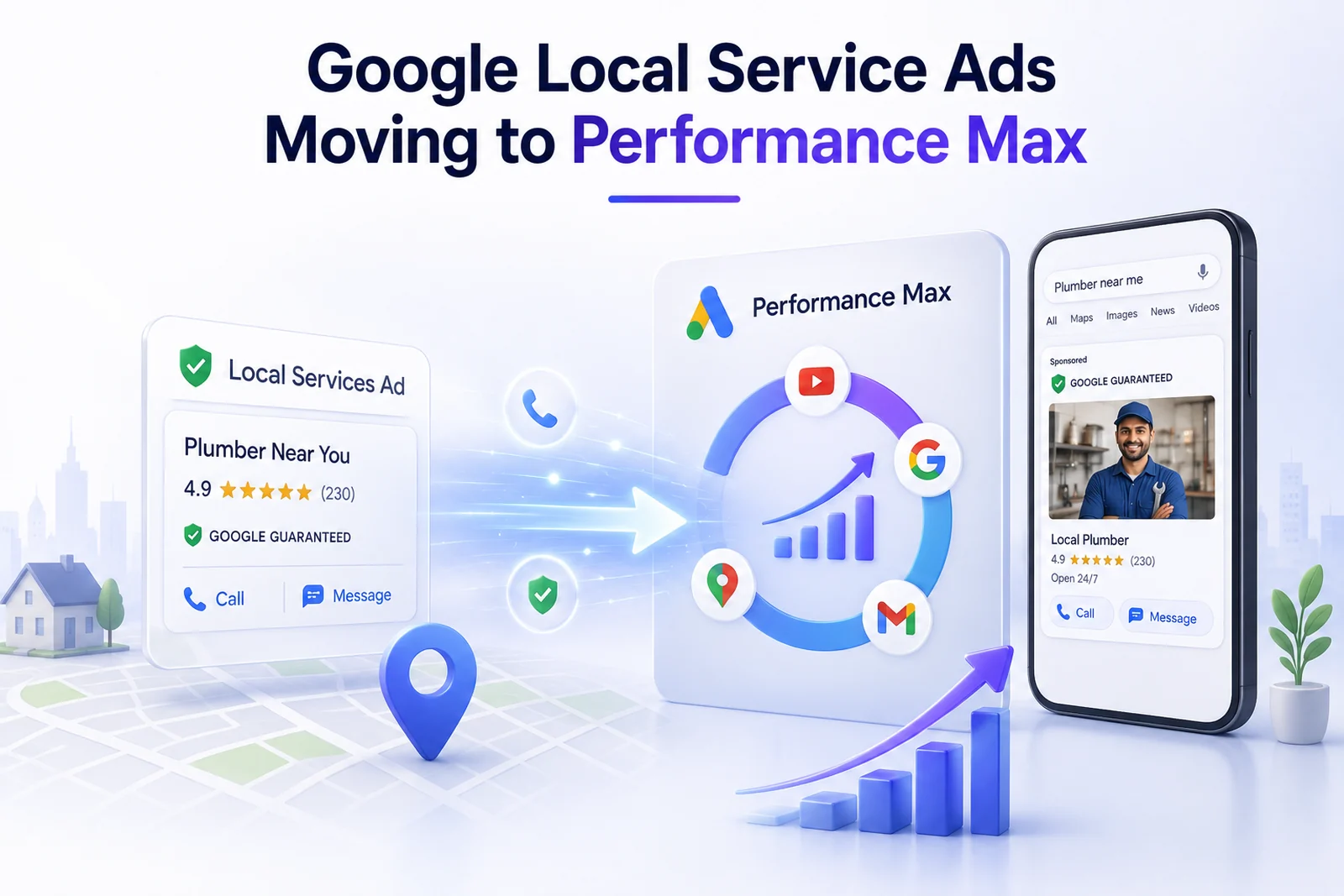
Google is migrating Local Service Ads — the pay-per-lead format used by service businesses — into its Performance Max platform, with existing campaigns switching automatically in August 2026. Budget settings, bid strategies and campaign structures will all change in the migration. Indian service businesses that do not review their accounts before the switch risk spending inefficiently or losing lead volume. Here is what to check.
What Is Actually Changing
Local Service Ads previously operated as a separate, simplified ad product with its own bidding system and profile-based format. By moving these campaigns into Performance Max, Google is integrating them into its primary AI-driven campaign type, which uses machine learning to optimise across Google’s entire inventory — Search, Maps, Display, YouTube and Gmail — simultaneously. The intent is to deliver more leads through broader reach, but it comes with significantly more complexity in budget management and campaign configuration than the original Local Service Ads interface.
What Changes in August and What Needs Review Now
Existing budget settings will migrate automatically but may need adjustment since Performance Max operates with different pacing behaviour than Local Service Ads. Bid strategies will shift to Smart Bidding — specifically Maximise Conversions or Target CPA — which means clean conversion tracking is now essential rather than optional. Service category targeting, geographic restrictions and booking integrations all need to be verified in the new platform structure rather than assumed to carry over correctly from the legacy format. This lands in the same month as the Google Ads budget cap removal, so service advertisers have two spend-affecting changes to absorb at once.
The Opportunity in the Migration
Performance Max for service businesses brings genuine advantages alongside the complexity: access to YouTube and Display inventory for brand awareness alongside the lead-generation objective, automated creative assembly that can surface your service to audiences who have not yet searched for it, and smarter budget allocation across placement types based on real-time performance signals. For Indian service businesses with clean conversion tracking and sufficient campaign history, the migration should deliver more lead volume at comparable or lower cost per lead over the medium term.
How to Prepare Before August
Four pre-migration actions matter most. First, verify conversion tracking is correctly configured and firing on all booking and enquiry completion events — this is the signal Performance Max optimises against. Second, review and update your Google Business Profile, since Performance Max pulls heavily from profile data for local service campaigns. Third, prepare asset groups — headlines, descriptions, images and any available video — since Performance Max requires creative assets that Local Service Ads did not. Fourth, set a Target CPA based on your historical cost per lead from the existing campaigns, giving the algorithm a starting point for optimisation. Combining clean tracking with a structured performance marketing approach to the migration reduces the risk of the switch causing a lead volume drop.
Monitoring the First 60 Days Post-Migration
Performance Max campaigns need a learning period — typically three to four weeks — before performance stabilises. Avoid making significant changes to budgets, bids or assets during this window. Monitor cost per lead weekly and compare against historical Local Service Ads benchmarks, but only take action if performance remains significantly below target after the learning window closes. For Indian service businesses in competitive local categories, lead generation continuity through the migration is the primary risk to manage.
Working With DigiVeritaz on the Migration
DigiVeritaz is preparing Indian service business clients for the Local Service Ads migration with pre-migration audits, conversion tracking verification, asset group preparation and post-migration monitoring. Book a free pre-migration review to ensure your campaign settings, tracking and creative are ready before the August switch.
Frequently Asked Questions
When exactly will Local Service Ads switch to Performance Max?
Google has indicated the automatic migration will begin in August 2026. Advertisers should review settings and prepare assets before this date to avoid the migration causing an unmanaged campaign configuration.
Will my cost per lead change after migration?
During the Performance Max learning period, cost per lead typically fluctuates before stabilising. Over a 60 to 90 day period post-migration, most service businesses see cost per lead return to or improve on their Local Service Ads baseline, assuming conversion tracking is correctly configured.
Do I need video assets for Performance Max local campaigns?
Video assets are recommended but not strictly required. Performance Max will automatically generate simple video assets from your images and text if no video is provided, but advertiser-provided video typically produces better results.
What if my local service ads are not running yet?
New local service advertisers will enter directly into the Performance Max structure rather than migrating from the legacy format, which is a simpler starting point than managing an existing campaign through the transition.
Explore our Google Ads services or contact us.