
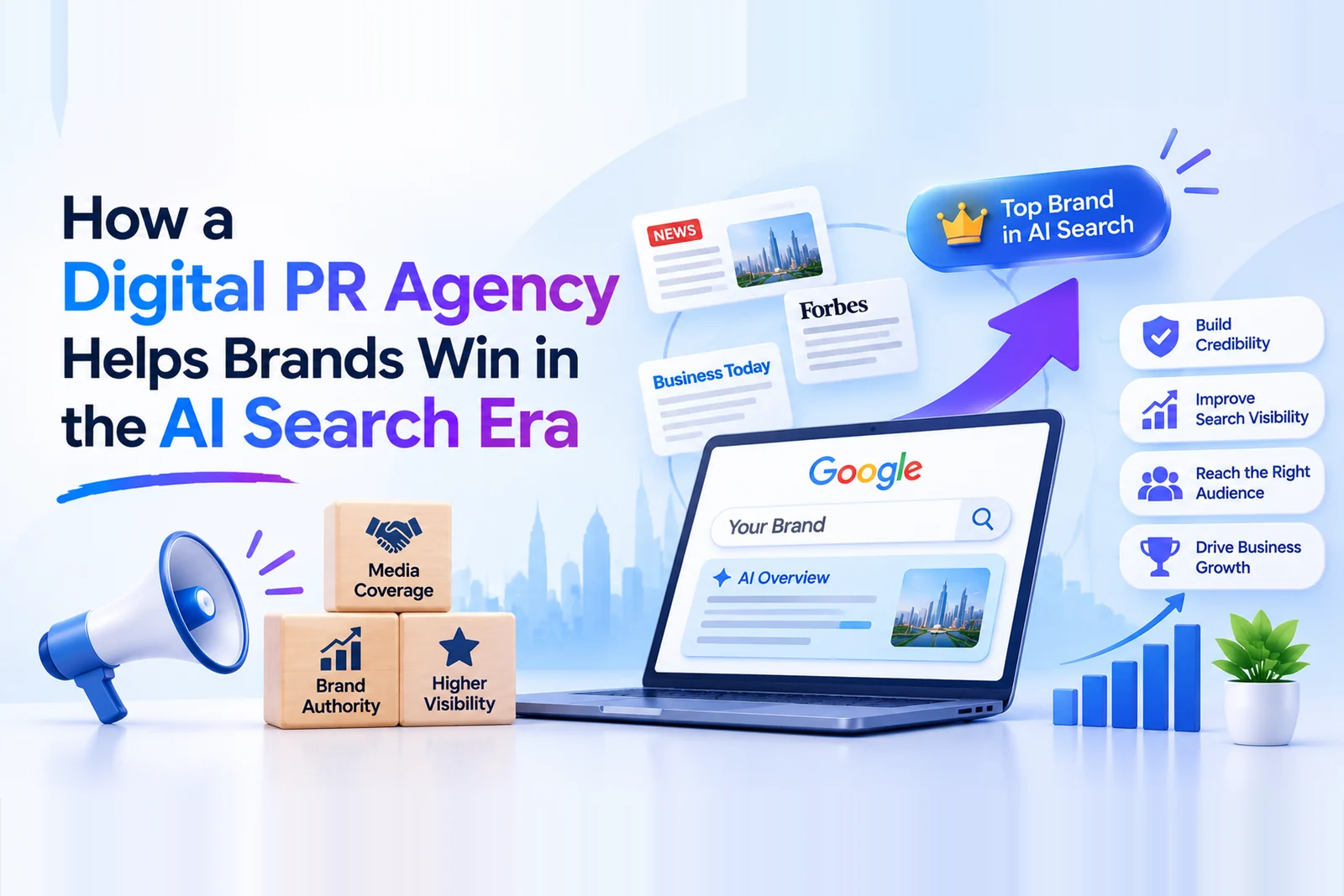
Search is changing faster than ever. A few years ago, people searched for products and services on Google, opened several websites and compared the results. Today, things work differently. People ask questions directly to AI platforms like ChatGPT, Google Gemini and Perplexity, and they expect quick, clear, trusted answers.
This change has created a new challenge for businesses. Ranking on Google is no longer the only way to build online visibility. Brands must also earn trust, authority and recognition across the wider digital world. This is where a digital PR agency plays an important role, helping businesses build reputation through media coverage, expert mentions, quality backlinks and meaningful brand stories.
What Is a Digital PR Agency?
A digital PR agency helps businesses improve their online reputation, brand awareness and search visibility through digital public relations. Unlike traditional PR, which focuses on newspapers, television, magazines and other offline media, digital PR focuses on online platforms: news websites, industry publications, blogs, digital magazines, podcasts and trusted online communities. The work involves earning mentions on credible websites, building relevant backlinks, sharing expert opinions, publishing newsworthy stories and strengthening online authority. Imagine someone searching for the best digital marketing companies in Mumbai. Several brands appear. The one that also receives positive mentions from respected business publications carries a stronger reputation into that moment.
Why Digital PR Matters in the AI Search Era
AI has changed how people discover information. Instead of clicking through several websites, users ask AI tools questions and receive direct answers. Platforms such as ChatGPT, Google AI Overviews, Gemini and Perplexity draw on information from across the web to generate those responses, which means brands need visibility beyond their own websites. Publishing good content on your domain is necessary but no longer sufficient. When trusted websites mention your brand, they create additional sources of information that both people and AI systems can draw on.
Brand Mentions Build Authority, Not Just Backlinks
Backlinks matter, but brand mentions deserve equal attention. A mention happens when another website refers to your business even without a clickable link. An industry publication might name your company while discussing marketing trends. These mentions build recognition and give people more ways to find information about you. Not every mention carries the same weight, though. Relevant coverage on trusted websites is worth considerably more than scattered mentions on low-quality platforms.
How Digital PR Supports E-E-A-T
Google uses Experience, Expertise, Authoritativeness and Trustworthiness as part of its search quality evaluation framework. A strong PR strategy supports these qualities by helping brands share real industry experience, get experts featured in relevant publications, build recognition within their industry, and earn coverage from credible sources. When a founder regularly shares useful insights through interviews, expert articles and media contributions, the brand builds recognition over time. Digital PR does not guarantee better rankings or AI citations, but it supports the reputation and authority signals that matter in online discovery.
Seven Ways Digital PR Improves AI Search Visibility
First, media coverage builds authority by putting your brand in front of audiences through trusted publications. A PR team identifies relevant journalists and editors, then develops newsworthy content, research findings or business updates worth their attention. Second, earning high-quality backlinks through original research, expert interviews and useful data builds a healthier link profile than volume ever will. Third, a wider digital footprint improves discoverability across platforms, because someone may search Google today and ask Perplexity tomorrow. Fourth, newsworthy content attracts genuine attention, whether that is original research, surveys, trend analysis or data-driven stories. Fifth, expert contributions strengthen trust, as business leaders contributing to trusted publications build recognition beyond their own websites. Sixth, PR supports both SEO and answer engine optimisation, since both benefit from relevant editorial links and clear, well-supported information. Seventh, consistent communication protects reputation, because negative reviews and outdated brand details create confusion that reputation management addresses directly.
Digital PR Services Worth Considering
Not every business needs the same strategy. A startup may want its first media presence, while an established company may want to deepen industry authority. These are the services most commonly worth the investment.
| Service | How it helps your brand |
|---|---|
| Media outreach | Connects your brand with journalists, editors and relevant publications. |
| Digital press releases | Shares company announcements and business updates where they will be seen. |
| Link building | Earns relevant editorial backlinks from trusted websites. |
| Brand mention campaigns | Increases recognition across relevant online sources. |
| Expert positioning | Builds recognition for founders and subject matter experts. |
| Content-led PR | Uses research, reports and stories to attract media attention. |
| Reputation management | Monitors and supports the brand's public image. |
| Competitor PR analysis | Identifies media opportunities and gaps in competitor coverage. |
Digital PR Compared With Traditional PR
Both aim to improve brand reputation, but they use different channels. Traditional PR works through newspapers, television, magazines and radio, measured by coverage and estimated reach, with only indirect impact on search. Digital PR works through news websites, blogs, online publications and digital platforms, measured by mentions, referral traffic, backlinks and engagement, and it can support search visibility directly. The two are complements rather than alternatives. Traditional coverage still carries weight, but only its digital traces are available to AI systems building an answer.
Rules for an Effective Digital PR Strategy
Publishing articles on random websites or collecting hundreds of backlinks will not improve your reputation. Focus on publications relevant to your industry rather than whatever will accept a placement. Prioritise quality over quantity, because a few meaningful mentions on trusted sites beat hundreds of low-quality ones. Share original information through real research, expert opinions and company data, which gives journalists a reason to pay attention. Avoid paid link schemes, since Google classifies these as link spam and paid placements should carry appropriate attributes such as rel="sponsored". Keep brand information consistent across platforms so audiences find accurate details. Measure real results rather than backlink counts. And follow Google's content guidelines, which recommend established SEO practices for AI search experiences rather than special tricks.
How to Choose the Right Digital PR Agency
A good agency understands that digital PR builds long-term trust rather than quick backlinks. Check whether they understand your industry, audience and business goals. Ask about the publications and media relationships they can genuinely approach. Review their previous campaigns and the quality of the coverage earned. Confirm they follow search engine guidelines and avoid spammy link building. Ask how they measure performance and share results. Choose a team that understands how PR works alongside SEO, content and brand reputation. The right partner will not promise instant rankings or guaranteed AI citations.
How to Measure Digital PR Success
A campaign should deliver measurable value. Track the number and quality of publications featuring your brand, how often other websites mention your business, the count of unique referring domains, and the relevance and credibility of the sites linking to you. Watch referral traffic from external publications, organic traffic growth, and changes in branded search volume. For AI visibility specifically, test relevant questions across AI platforms and record whether your brand appears, which sources get cited, and how often competitors show up. Remember that AI responses vary between searches, so track visibility over time rather than treating a single result as evidence. Google Analytics 4, Search Console, backlink tools and media monitoring platforms cover most of this.
What Comes Next for Digital PR
The future will focus on more than backlinks and coverage. Brand recognition matters more as people discover businesses through AI answers, expert recommendations and online discussions. Expert-led content stands out against generic material. PR and SEO teams will need to work closely, with PR building external recognition while SEO improves structure, content quality and accessibility. Campaigns will lean harder on research and surveys to earn genuine attention. And online reputation will carry more weight as people seek reliable information before choosing a business. Businesses that invest in genuine expertise and real relationships will be better prepared for whatever search becomes next.
Frequently Asked Questions
What does a digital PR agency actually do?
It helps businesses improve online reputation and visibility through media outreach, expert contributions, digital publications, brand mentions and content campaigns, with the goal of building awareness and authority rather than simply placing links.
Can digital PR help a brand appear in ChatGPT and Google AI Overviews?
Digital PR creates more opportunities for brands to appear in AI-generated answers by building online recognition and earning relevant coverage. However, no agency can guarantee AI citations or recommendations, because those depend on relevance, available information and each platform's retrieval systems.
How long does it take to see results from digital PR?
Results depend on your industry, competition and campaign strategy. Some campaigns generate coverage within weeks, while building genuine brand authority usually takes several months of consistent effort.
How does digital PR differ from traditional PR?
Traditional PR focuses on newspapers, television, magazines and radio. Digital PR focuses on online publications, news websites, blogs, podcasts and brand mentions, and only digital coverage is available to the AI systems assembling answers.
Explore our digital PR services or contact us.