
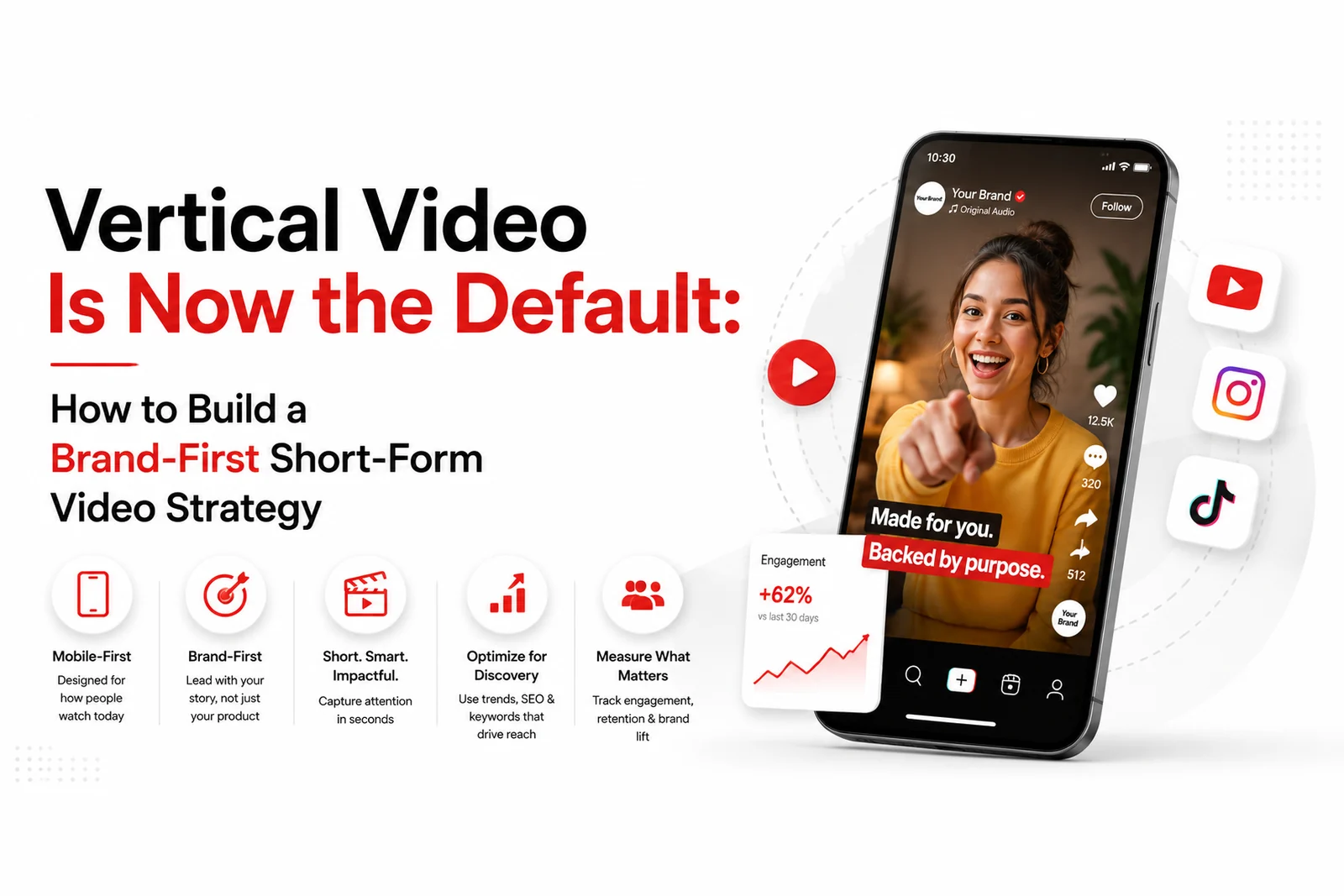
YouTube, Instagram, TikTok and X have all shifted their default content experience toward short, vertical video. This is no longer an emerging format — it is the primary surface on which most mobile users consume content. For Indian brands still treating vertical video as an optional add-on to a horizontal-first content strategy, the cost of that delay is compounding daily. Here is how to build a brand-first vertical video approach.
Why Vertical Video Has Won Across Every Platform
The shift is structural, not aesthetic. Mobile phones are held vertically for roughly 94 percent of usage time, and platforms optimising for that natural hold position see dramatically higher watch times and engagement rates than those fighting it. YouTube Shorts now generates billions of views daily. Instagram Reels consistently outperforms square and horizontal posts in algorithmic reach. TikTok was built entirely around the vertical format from day one. Even X, historically a text-first platform, has built its 2026 video push around vertical content. The format has won; the question is how brands use it strategically rather than reactively.
What Brand-First Vertical Video Actually Means
Brand-first vertical video is not about slapping a logo on a TikTok-style clip and calling it done. It means designing every visual and audio element for a 9:16 frame from the start of production: text overlays placed within the safe zone, captions designed as a core design element rather than an afterthought, brand colours and typography visible within the first two seconds, and audio mixed for a viewer who may be watching with sound off. Content designed for horizontal consumption and simply cropped to vertical looks amateurish by comparison — the audience notices, even if they cannot articulate why. Pairing this visual discipline with a clear branding and design system ensures consistency across every vertical asset your team produces.
The Three Vertical Video Formats That Consistently Work
Three formats deliver disproportionate results across Indian audiences on vertical platforms. First, the talking-head expert format — a founder, specialist or team member speaking directly to camera with captions, sharing a specific insight or opinion. Second, the before-and-after format — demonstrating a transformation, result or contrast that is visually legible within 30 seconds. Third, the hook-and-reveal format — opening with a counterintuitive claim or surprising statistic and building to a resolution that earns the watch. Each of these works because it is designed for the consumption context rather than the production convenience of the brand.
Building a Sustainable Vertical Video Production Workflow
The most common failure in vertical video programmes is inconsistency — brands produce a burst of content during a campaign period and then go dark. A sustainable workflow produces three to five pieces of vertical content per week across platforms without requiring a full production team for every piece. This means batch filming — shooting a month of talking-head content in a single half-day — combined with AI-assisted caption generation and template-based editing and a platform-specific distribution plan that schedules content for maximum visibility. Combining this workflow with structured content marketing editorial planning ensures video serves strategic goals rather than filling platforms with disconnected clips.
Measuring Vertical Video Performance Correctly
Standard social metrics — reach and impressions — do not tell you enough about vertical video performance. Track three platform-specific signals: completion rate (what percentage of viewers watch past 50 percent of the video), shares to Stories (the strongest algorithmic signal on Instagram and TikTok), and profile visits triggered by the video. These three metrics tell you whether the content is genuinely engaging rather than just being served. Indian brands searching for a digital marketing agency in India to manage short-form video should expect reporting that surfaces these engagement-quality metrics alongside raw reach data.
Working With DigiVeritaz on Vertical Video Strategy
DigiVeritaz builds vertical video content strategies and production workflows for Indian brands across Instagram Reels, YouTube Shorts, TikTok and X, combining brand-first creative direction with sustainable production systems and platform-specific measurement. Book a free video strategy session to see how your brand's current content mix stacks up against a vertical-first approach.
Frequently Asked Questions
What is the ideal length for a vertical video on Instagram Reels in 2026?
15 to 30 seconds performs best for reach and completion rate across most content categories on Instagram Reels. Up to 90 seconds works for educational content with strong hooks but requires higher production value to hold attention.
Do I need professional equipment to produce vertical video content?
No. A modern smartphone with good lighting — natural light or a basic ring light — and a quiet recording space produces quality sufficient for most social media vertical video. The creative and editorial quality of the content matters more than production equipment at this stage.
How do I make vertical video that stays on-brand?
Define a visual template with consistent brand colours, font choices for text overlays, logo placement and colour grading that applies to every vertical video your team produces. This template consistency creates brand recognition even without watching from the beginning.
Which platform should I prioritise for vertical video first?
For most Indian brands, Instagram Reels offers the largest active audience and the most developed algorithmic distribution for new vertical content. Start here before expanding to YouTube Shorts and TikTok.
Explore our social media management services or contact us.