
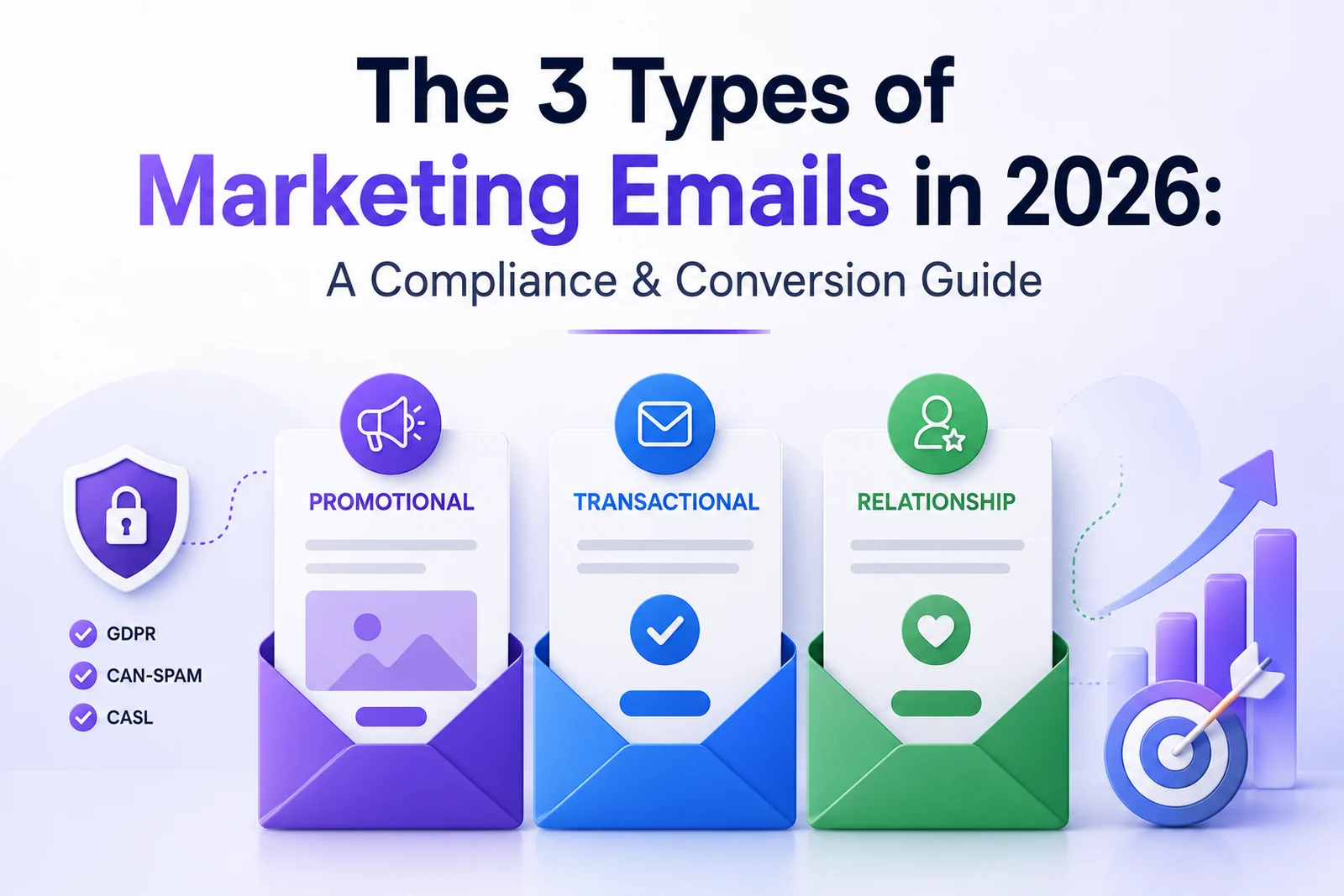
Not every business email is the same, and treating them identically costs both compliance and conversion. A new industry guide breaks marketing emails into three categories — order confirmations, behaviour-triggered automated messages, and sales announcements — each with different rules for content and unsubscribe requirements. Here is how to apply this to your lead generation and retention programme.
Category One: Transactional and Order Confirmation Emails
These are triggered directly by a customer action — a purchase, a booking, an account creation — and carry the fewest content restrictions because the recipient expects and requested the communication. Unsubscribe requirements are typically lighter for pure transactional messages, though best practice still recommends including account-level preference controls. Mixing promotional content into transactional emails at high volume can trigger stricter compliance rules and reduce recipient trust.
Category Two: Behaviour-Triggered Automated Messages
These emails respond to specific customer behaviour — cart abandonment, browsing history, milestone anniversaries — and sit in a middle zone between transactional and promotional. They require clear unsubscribe options and should be scoped tightly to the triggering behaviour rather than becoming a vehicle for broader promotional content. Well-designed behavioural email sequences are among the highest-converting assets in a lead generation programme because they respond to demonstrated intent rather than blanket targeting.
Category Three: Sales Announcements and Promotional Campaigns
These carry the strictest requirements — explicit opt-in consent, clear sender identification, and prominent, functioning unsubscribe mechanisms in every message. This category includes newsletters, product launch announcements and discount campaigns. Getting this category wrong is the most common source of spam complaints and deliverability damage, so list hygiene and consent documentation matter more here than in the other two categories combined, and the email itself deserves the same conversion rate optimisation discipline as any landing page.
Why Getting the Categories Right Improves Deliverability
Email providers increasingly evaluate sender reputation based partly on whether senders correctly categorise and format different email types. Businesses that blend all three categories into a single undifferentiated sending pattern see higher spam complaint rates and declining inbox placement over time. Segmenting your email infrastructure by category — separate sending domains or subdomains where volume justifies it — protects deliverability for your most important promotional sends.
Building Category-Aware Email Sequences
Map your current email programme against these three categories and identify where content is currently mismatched — promotional content riding on transactional templates, or behavioural triggers missing proper unsubscribe options. A well-structured lead generation and nurture programme should have distinct templates, sending cadences and compliance treatment for each category, rather than a single generic email system handling everything the same way.
Working With DigiVeritaz on Email Strategy
DigiVeritaz builds category-aware email and lead nurture programmes for Indian brands as part of broader lead generation and performance marketing engagements, ensuring compliance is built in rather than bolted on. Businesses evaluating a digital marketing agency in India for email and retention work should ask specifically how prospective partners handle these three categories, since compliance failures in this area directly damage sender reputation and long-term conversion performance.
Frequently Asked Questions
What happens if I mix promotional content into transactional emails?
It can trigger stricter compliance requirements and increase spam complaint risk, since recipients did not opt in to promotional content through a transactional interaction like a purchase confirmation.
Do behavioural emails need explicit opt-in?
They require clear unsubscribe options and should stay scoped to the triggering behaviour. Requirements vary by jurisdiction, so check specific regulations relevant to your audience's location.
How do I improve deliverability for promotional sends?
Maintain clean list hygiene, document consent clearly, and consider separating sending infrastructure for promotional versus transactional and behavioural emails as volume grows.
Which category drives the most conversions?
Well-designed behaviour-triggered emails typically convert best because they respond to demonstrated intent, though promotional campaigns remain essential for broader reach and announcements.
Explore our lead generation services in India or contact us.