
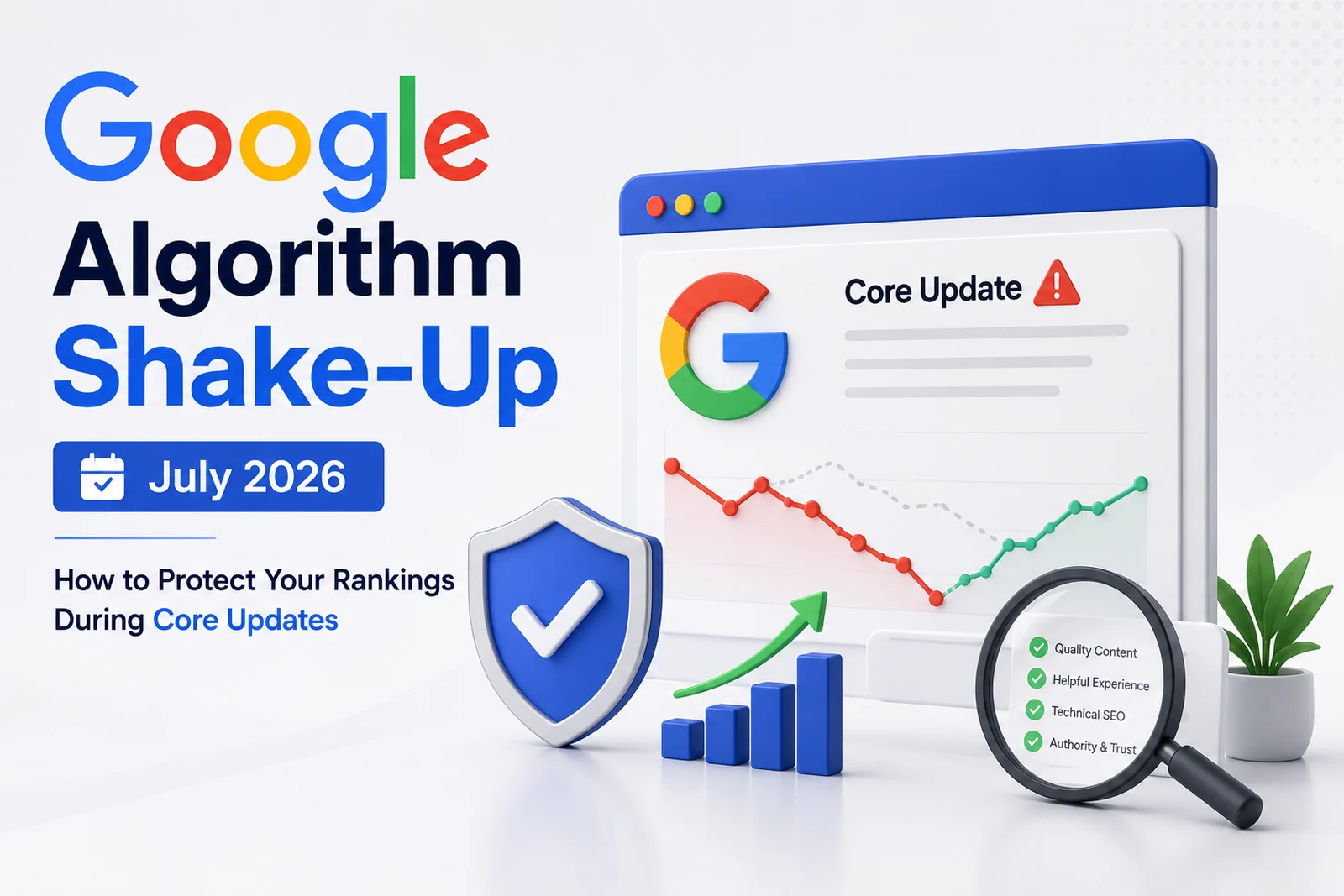
Google's search results have been in significant flux since late July 2026, with large ranking movements reported across multiple industries. For Indian brands that rely on organic search for pipeline, a core update is not an abstract platform event — it is a direct revenue risk. Here is how to diagnose what is happening and protect your position.
What Is Actually Happening in July 2026
Google has been rolling out a significant algorithm update since late July, with Search Engine Roundtable and multiple tracking tools confirming substantial ranking volatility across categories. Core updates typically take one to two weeks to fully roll out, meaning sites that have seen drops may see partial recovery before the dust settles, and sites that have seen gains may face adjustments. The update appears to be evaluating content quality, expertise signals and page experience more aggressively than previous updates — consistent with Google's stated direction toward AI-enhanced quality assessment.
How to Diagnose Whether Your Site Is Affected
Open Google Search Console and compare organic clicks and impressions for the seven days before the update began against the seven days after. Filter by country to isolate Indian traffic specifically if you serve both domestic and international audiences. Next, sort your top landing pages by traffic decline — this tells you which specific pages were downgraded rather than giving you an average that could mask severe drops on specific pages. Cross-reference against Core Web Vitals data for the same pages, since speed and usability issues amplify quality-related demotions in core updates. If pages have disappeared entirely rather than dropped, that is an indexing problem rather than a ranking one and needs a different diagnosis.
The Most Common Reasons Sites Drop in Core Updates
Core updates do not target technical issues specifically — they reassess content quality at scale. The most common causes of drops are thin content that ranks for volume rather than genuine depth, pages that match keywords but do not fully satisfy the underlying search intent, content without visible authorship or credible expertise signals, and pages where third-party reviews and trust signals are absent. A site with consistently strong technical SEO foundations but weak content quality is particularly vulnerable to core updates because the content gap becomes the main variable.
What to Do Immediately After a Drop
First, do not make hasty site-wide changes hoping to reverse the drop quickly — core update impacts typically only reverse at the next major update, not from reactive tweaks. Instead, identify your five most affected pages and run a content quality audit on each: does the page genuinely answer the query better than the competitors now outranking you? If not, invest in substantial content improvement with original data, expert perspective and clear answer structure. Pair this with a review of your digital PR and backlink profile for those specific pages, since authority signals matter alongside content quality.
Building Long-Term Core Update Resilience
Brands that consistently weather core updates share three characteristics: they publish content under named expert authors with visible credentials, they cite original data or proprietary insights that competitors cannot replicate, and they invest in online reputation management and trust-building across their digital footprint. A single round of content improvement helps in the short term; a systematic content quality programme built around these principles compounds into a site that Google consistently rewards rather than periodically penalises. Indian brands investing in digital marketing services in Mumbai or nationally should treat core update resilience as a strategic priority rather than a reactive exercise.
Working With DigiVeritaz on Algorithm Recovery
DigiVeritaz runs core update impact assessments and content quality programmes for Indian brands, identifying exactly which pages are underperforming and building improvement plans grounded in genuine expertise and editorial depth rather than tactical fixes. Book a free SEO audit to see how your site is positioned after the July 2026 update.
Frequently Asked Questions
How long does a Google core update take to roll out?
Core updates typically take one to two weeks to fully roll out. Rankings during the rollout are unstable and should not be treated as final — wait for the rollout to complete before drawing conclusions or making major changes.
Should I make immediate changes after seeing a ranking drop?
No. Reactive changes during an active core update rollout rarely help and can introduce new issues. Diagnose which pages dropped and why, then build a content quality improvement plan to implement after the rollout is complete.
How do I know if my drop is from the core update or something else?
Check the timing against the confirmed core update dates on Search Engine Roundtable and Google's own announcements. If the drop aligns with the rollout start date and affects multiple pages across different topics, it is almost certainly core-update-related.
Can rankings recover after a core update without any changes?
Partial recovery sometimes happens as the update finishes rolling out. Full recovery from a quality-related demotion typically requires genuine content improvement and is more likely to be confirmed at the next core update rather than immediately.
Explore our SEO services or contact us.