
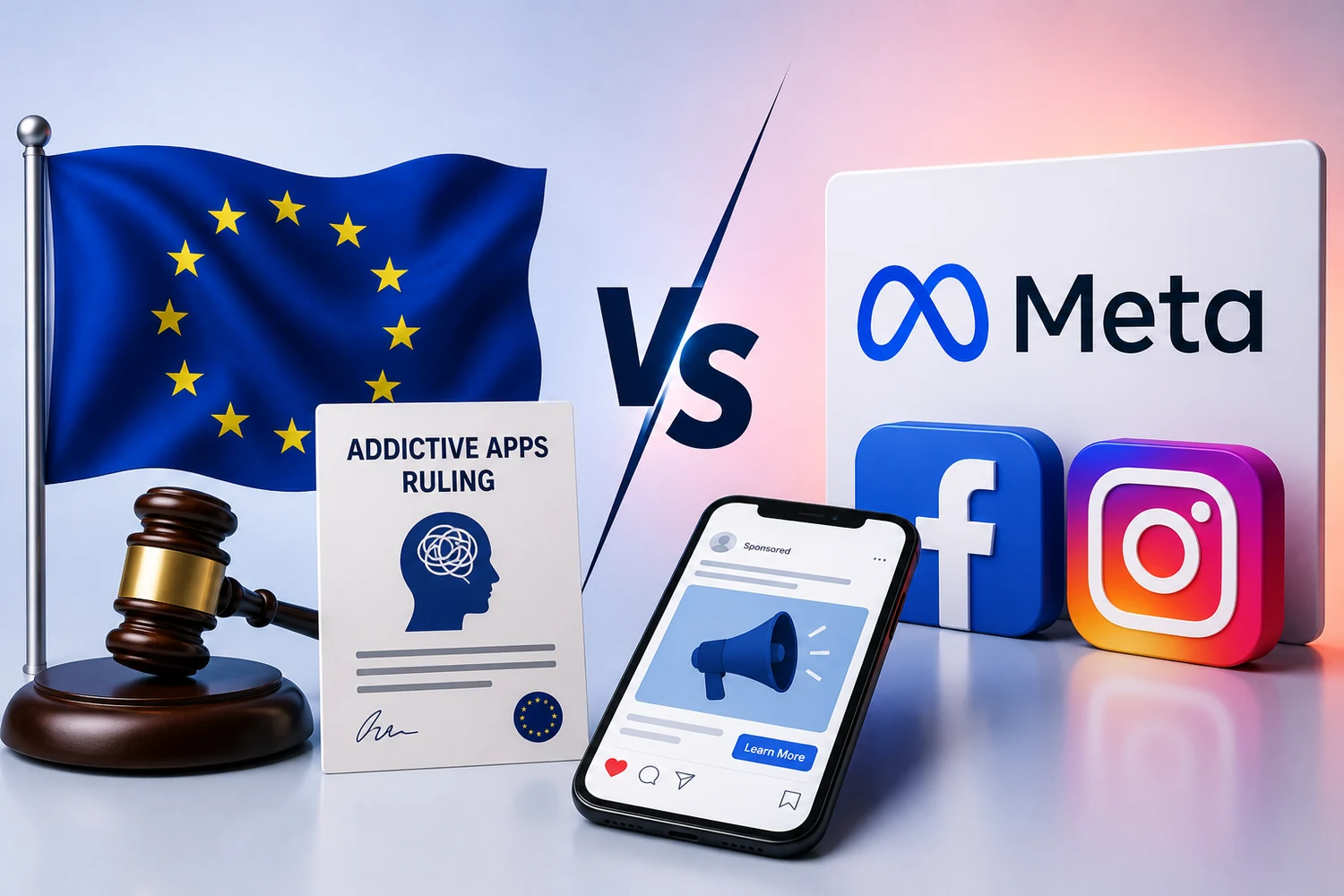
The European Commission's preliminary finding that Instagram and Facebook are designed to be addictive could force Meta to redesign autoplay, infinite scroll and notification features. For brands running paid and organic campaigns, this is not a distant EU-only story — platform-level changes tend to roll out globally. Here is what the ruling means and how a digital marketing agency in India should help you prepare.
What the EU Commission Actually Found
Regulators pointed specifically to endless scrolling feeds and videos that autoplay without user action as evidence of addictive-by-design product choices. This is a preliminary finding, not a final ruling, but it opens a formal process that could require Meta to change default settings, add friction points or give users stronger controls over autoplay and notifications within the EU. Similar scrutiny has followed TikTok and YouTube in past years, and each time, resulting design changes have not stayed confined to the region that triggered them.
Why Global Brands Should Pay Attention
Meta rarely builds two separate product experiences for different regions when a regulatory outcome affects core engagement mechanics. Historically, EU-driven changes to ad transparency, data consent and content ranking have rolled out worldwide within 12 to 18 months. Indian brands running Facebook and Instagram advertising should treat this as an early warning that engagement-driven ad formats — video view campaigns, autoplay-dependent creative — may see reduced effectiveness as platform defaults shift toward less compulsive usage patterns.
Likely Feature Changes and Their Ad Impact
Expect possible changes to include opt-in rather than opt-out autoplay, visible time-spent reminders, and reduced algorithmic amplification of high-engagement-but-low-value content. For advertisers, this could mean lower average watch time on video ads, reduced organic reach for engagement-bait content, and a shift in the algorithm's reward signals away from pure watch time toward completion and action-based signals. Campaigns built entirely around passive video consumption will likely see efficiency decline first.
How to Future-Proof Your Meta Ad Strategy
Diversify creative formats now rather than waiting for the ruling to finalise. Build campaigns around clear calls to action rather than pure engagement metrics. Invest in first-party data capture — email, WhatsApp opt-ins, CRM — so your audience relationships do not depend entirely on platform algorithms you do not control. A well-run Facebook and Instagram advertising programme in 2026 should already be optimising toward conversion and lead quality rather than legacy engagement metrics that may lose relevance.
Why Diversifying Beyond Meta Matters More
Brands relying on a single platform for the bulk of paid social spend carry concentrated regulatory risk. Spreading budget across Google Ads, WhatsApp marketing, display advertising and organic SEO reduces exposure to any single platform's policy shifts. Many Indian businesses working with digital marketing services in India are already rebalancing budgets this way, treating Meta as one channel among several rather than the default first spend.
Building Resilient Paid Media in 2026
Resilient paid media combines diversified platform spend, first-party data capture, and creative built for genuine engagement rather than compulsive consumption. Indian brands working with an experienced social media marketing company in India are adapting campaign structures now, ahead of any confirmed feature changes, so performance does not suffer when Meta eventually responds to EU pressure. Waiting for the final ruling before adjusting strategy typically means reacting after performance has already dropped.
Frequently Asked Questions
Is the EU's Meta ruling final?
No, it is a preliminary finding, not a final ruling. It opens a formal regulatory process that could take months or years to conclude, but it signals the direction Meta may need to move in regardless of final legal outcomes.
Will this affect Meta advertising outside the EU?
Likely yes over time. Meta has historically rolled out EU-driven product and policy changes globally within 12 to 18 months rather than maintaining separate regional versions of core engagement features.
Should I pause my Instagram and Facebook ad spend?
No. The changes, if they happen, will roll out gradually. The right response is diversifying creative and measurement now, not pausing an active, working channel prematurely.
What should I do first to prepare?
Start capturing first-party data — email and WhatsApp opt-ins — so your audience relationships do not depend entirely on Meta's algorithm and any changes it makes in response to regulatory pressure.
Explore our Facebook and Instagram advertising services in India or contact us.