
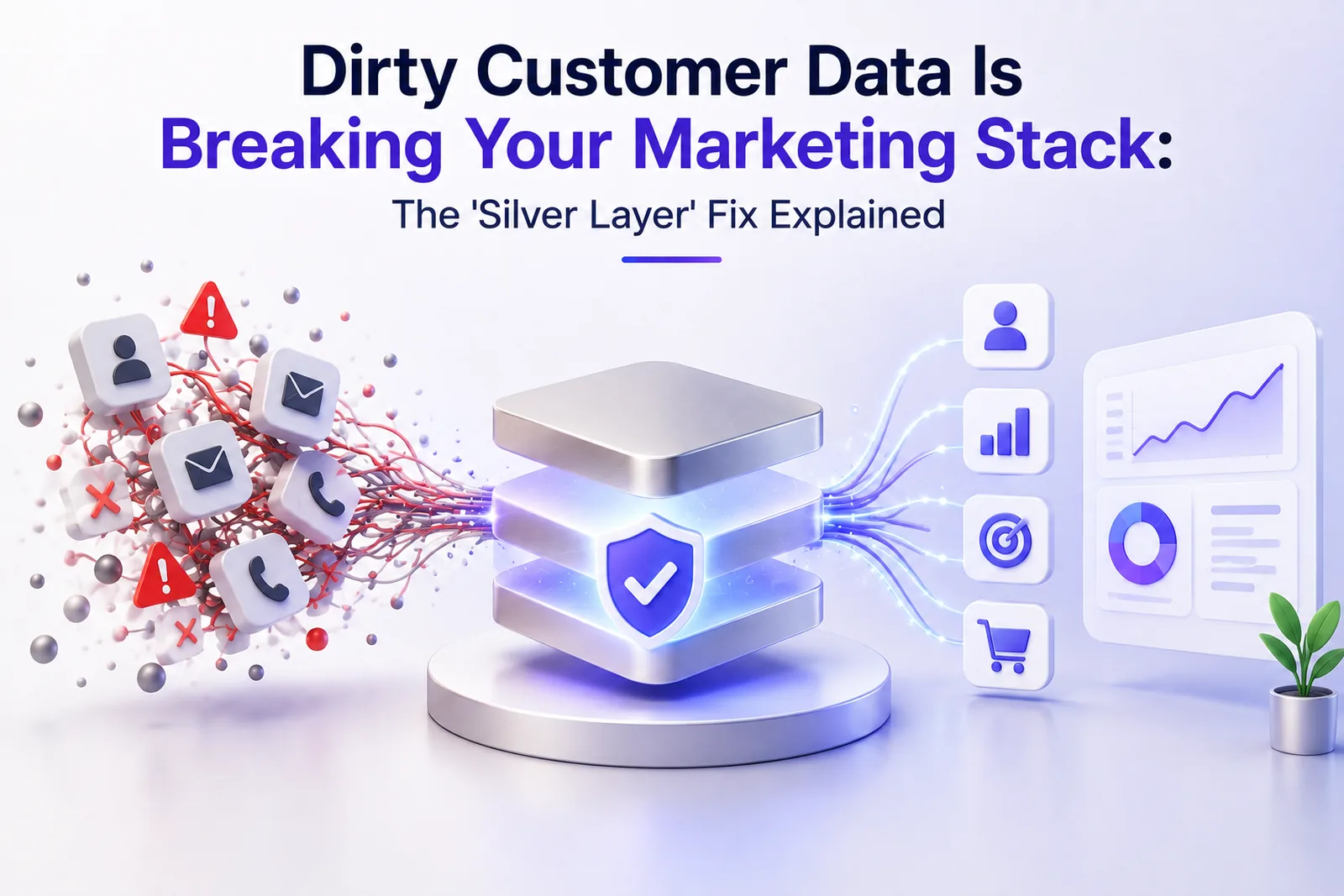
Many Indian brands have invested heavily in marketing personalisation tools — CRM platforms, email automation, ad targeting systems — only to find they underperform. The most common cause is not the tools; it is the data fed into them. A new framework describes the missing step as building a ‘silver layer’ of clean, unified customer data before those tools can work effectively. Here is what it means and how to build it.
What ‘Dirty Data’ Actually Means
Dirty customer data typically manifests in four ways: duplicate records across systems where the same customer exists under different email addresses, phone numbers or spellings of their name; inconsistent formats that prevent reliable matching between systems; outdated information that reflects who a customer was two years ago rather than now; and fragmented records where a customer's purchase history, support interactions and campaign engagement are stored in separate systems with no shared identifier. Each of these causes personalisation tools to make incorrect assumptions about who they are targeting and what that person has already experienced from the brand.
The Silver Layer Concept Explained
The ‘silver layer’ is a clean, unified customer record that sits between your raw data sources and your marketing tools. Raw data from CRM, e-commerce platform, customer support, advertising platforms and website analytics goes in — deduplicated, standardised, matched to a single customer identifier and enriched with calculated attributes like recency, frequency and lifetime value — and a clean, reliable customer record comes out. This clean layer feeds your personalisation and segmentation tools rather than the raw, messy source data. The name comes from data architecture terminology: bronze layer is raw data, silver is cleaned data, gold is business-ready aggregated data.
Why Tools Fail Without It
A personalisation engine given duplicate customer records sends the same email twice to the same person. An ad retargeting system given fragmented records targets existing customers with acquisition messaging. A loyalty programme given outdated records miscalculates tier status. A recommendation engine given inconsistent product interaction data surfaces irrelevant suggestions. In each case, the tool is functioning correctly — it is doing exactly what it was built to do — but the input data is so unreliable that the output is wrong. The fix is always the data layer, not the tool.
How to Build Your Silver Layer
The silver layer requires three components: a shared customer identifier that can link records across systems (typically email address or phone number with normalisation applied), a deduplication process that identifies and merges duplicate records with clear rules for which data wins when conflicts exist, and a refresh cadence that keeps the layer updated as new data arrives from each source system. Getting the tracking underneath it right matters just as much, which is why this usually runs alongside an analytics configuration review. For most Indian mid-market brands, this is achievable within a two-to-three-month project using existing CRM and data warehouse tooling rather than requiring entirely new infrastructure.
What Improves Once the Data Is Clean
The improvements following a silver layer implementation are consistent and measurable: email personalisation relevance improves immediately as segments reflect actual customer behaviour rather than fragmented snapshots. Ad retargeting exclusion lists work correctly, reducing wasted spend on existing customers. CRM-driven lead generation sequences send the right message at the right stage because they have an accurate picture of where each prospect is in the journey. And performance marketing attribution becomes more reliable because customer touchpoints can be correctly stitched to outcomes.
Working With DigiVeritaz on Data Strategy
DigiVeritaz builds silver layer data architectures and customer data clean-up programmes for Indian brands as part of comprehensive data strategy consulting engagements, enabling personalisation tools to deliver the results they promised. Book a free data health audit to see how clean your current customer data actually is and what a silver layer build would cost and deliver.
Frequently Asked Questions
How do I know if my customer data is ‘dirty’?
Common signals include duplicate contacts in your CRM, mismatched email sequences reaching customers at the wrong stage, retargeting ads hitting existing customers, and significant variation in how contact records look across different reports.
How long does a silver layer build typically take?
For a mid-market Indian brand with three to five data source systems, a silver layer build typically takes two to three months from audit to deployment, depending on the complexity of the matching and deduplication logic required.
Do I need a data warehouse to build a silver layer?
Not necessarily. For simpler architectures, a clean customer database built within an existing CRM like Salesforce or HubSpot with proper deduplication rules applied can serve the same function as a separate warehouse-based silver layer.
What is the ROI of cleaning up customer data?
In our experience, brands completing a silver layer build typically see email conversion rates improve 15 to 25 percent, retargeting spend efficiency improve 20 to 30 percent and CRM-driven pipeline attribution accuracy improve significantly, all within the first quarter after deployment.
Explore our data strategy consulting services or contact us.