
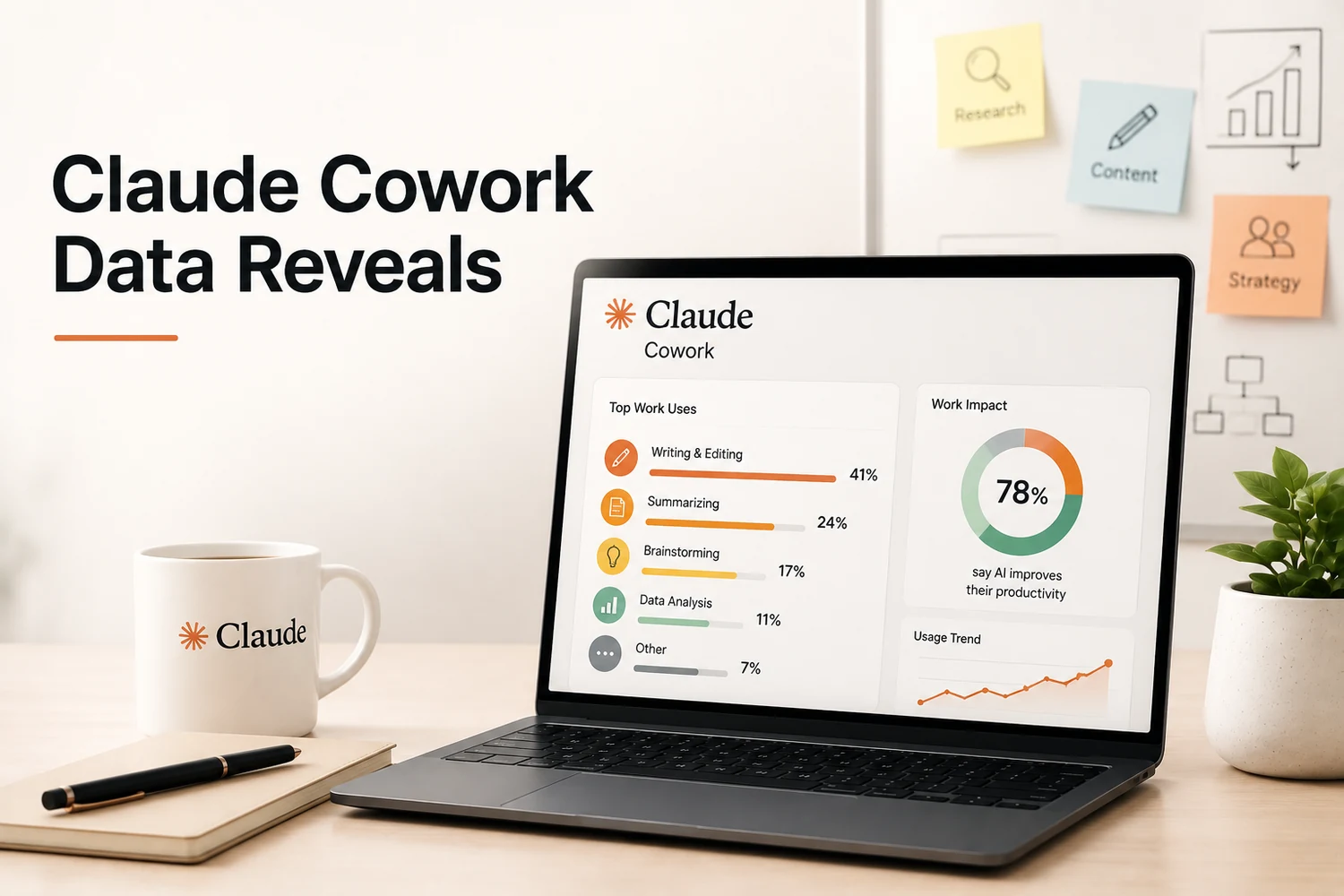
Anthropic's data on how businesses actually use its Claude Cowork tool shows the bulk of usage goes toward reports, checklists and presentations — not the ambitious strategic use cases most companies imagined. For marketing teams evaluating AI investment, this is a useful reality check. Here is what the data means and how a performance marketing agency should apply it.
What the Claude Cowork Data Actually Shows
Anthropic found that the majority of Claude Cowork usage centres on everyday office tasks — writing reports, building checklists, drafting presentations and other routine content creation. This contrasts with the more ambitious narrative around AI replacing entire strategic functions. The practical reality is that AI's proven value today sits mostly in operational efficiency: taking repetitive writing and formatting work off people's plates so they have more time for judgement-driven work.
Why This Matters for Marketing Teams
Many Indian marketing teams have delayed AI adoption waiting for tools capable of full campaign strategy or creative direction. The Cowork data suggests the immediate, reliable value is elsewhere — in report generation, meeting summaries, content formatting, competitive research compilation and first-draft creation. Teams that deploy AI for these tasks now see faster, more measurable productivity gains than teams waiting for more ambitious capabilities to mature.
Five Practical Marketing Use Cases Backed by the Data
First, weekly and monthly performance reporting — feeding raw campaign data into AI for narrative summaries. Second, meeting preparation and follow-up documentation. Third, first-draft content creation for blogs, social captions and email copy, with human editing before publishing — a pattern that increasingly supports content marketing teams working through high publishing volumes. Fourth, competitive research compilation from public sources, including tracking rival rankings for teams running active SEO programmes. Fifth, checklist and SOP creation for recurring campaign workflows. Each of these matches the routine-task pattern the Cowork data actually validates, rather than speculative use cases.
What AI Still Cannot Reliably Do
The data implicitly confirms what many marketing leaders have already learned through trial and error — AI still struggles with genuine strategic judgement, nuanced brand voice without heavy guidance, and creative direction that requires understanding a specific market context. These remain human-led functions. The mistake is either avoiding AI entirely because it cannot do everything, or over-trusting it to do things the data shows it is not yet reliably used for.
Building an AI-Augmented Marketing Workflow
Structure your team's AI usage around the operational tasks the data validates, freeing senior marketers for strategy, creative direction and client relationships. This is the model a well-run digital marketing agency in India increasingly follows internally — routine reporting and drafting handled with AI assistance, strategic decisions and creative judgement remaining firmly human-led. The productivity gain compounds when the division of labour matches where AI is actually reliable.
Working With a Team That Uses AI Responsibly
Indian brands evaluating agency partners should ask directly how AI is used in their workflow — for routine efficiency or as an unsupervised substitute for strategic thinking. A performance marketing agency that uses AI for reporting, research and drafting while keeping strategy and creative direction human-led will consistently outperform either extreme. This balance is exactly what the Claude Cowork usage data supports for marketing organisations in 2026.
Frequently Asked Questions
What is Claude Cowork?
Claude Cowork is Anthropic's AI tool designed for business and office use, covering tasks like reports, checklists and presentations rather than open-ended creative or strategic work.
Does this mean AI cannot do strategic marketing work?
Not entirely, but current adoption data shows the most reliable, widely used value is in routine task execution. Strategic use cases remain less proven and typically still require significant human judgement.
How should I prioritise AI adoption in my team?
Start with the routine tasks the data validates — reporting, drafting, research compilation — before investing heavily in more ambitious strategic AI use cases that remain less mature.
Is AI usage data like this reliable for planning?
It is a useful directional signal from real usage patterns across many organisations, though your own team's specific needs and maturity level should still guide final tool and workflow decisions.
Explore our performance marketing services in India or contact us.