
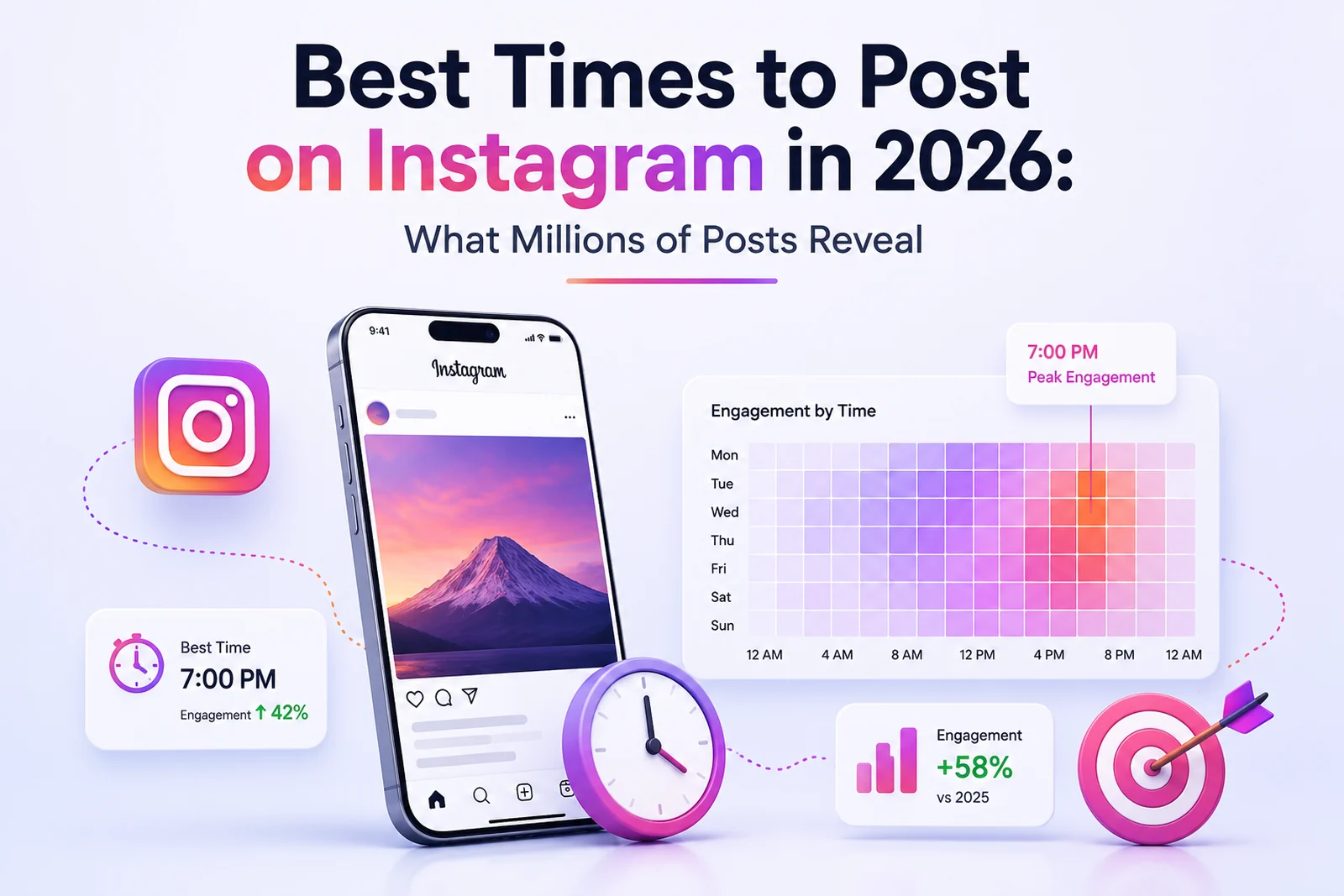
A large-scale study analysing millions of Instagram posts has identified clear patterns in when content earns the most attention, with Wednesday and Thursday evenings emerging as consistent top performers. For brands running organic and paid social, timing data like this offers an easy, low-cost performance lever. Here is what the data shows and how a social media marketing company in India should apply it.
What the Data Actually Shows
The study found Thursday at 9 a.m., along with Wednesday at 12 p.m. and 6 p.m., emerging as the strongest posting windows across the dataset. Midweek evening slots outperformed both early-week and weekend posting times consistently across the sample. This aligns with broader behavioural patterns showing midweek as a period of higher scrolling engagement compared to Monday's catch-up mode or weekend's more sporadic, leisure-driven usage.
Why Timing Still Matters in an Algorithm-Driven Feed
Some marketers assume Instagram's algorithm has made posting time largely irrelevant since content surfaces based on relevance rather than pure recency. The data suggests otherwise — early engagement velocity in the minutes after posting remains a meaningful signal the algorithm uses to decide how widely to distribute a post. Posting when your specific audience is most active increases the odds of strong early engagement, which compounds into broader algorithmic reach.
Why Your Own Audience Data May Differ
Aggregate study data provides a useful starting point, but audience behaviour varies meaningfully by industry, geography and demographic. Indian audiences, particularly across different city tiers and age segments, may show timing patterns that diverge from a global dataset. Brands should treat published research as a baseline hypothesis to test against their own Instagram Insights data rather than a rule to follow blindly.
How to Test and Refine Your Own Posting Schedule
Run a structured four to six week test posting comparable content at the study's recommended times versus your current schedule, then compare reach, engagement rate and profile visits. Segment the analysis by content type, since Reels, carousels and static posts often perform best at different times even within the same account. Use these findings to build an audience-specific posting calendar rather than relying purely on general benchmarks.
Combining Timing With Content Quality
Optimal timing amplifies good content but cannot rescue weak content. Brands searching for a digital marketing agency in India for social media should be wary of any partner presenting posting schedule optimisation as a standalone strategy — timing is a multiplier on top of strong creative, clear messaging, consistent brand voice and, where relevant, influencer marketing collaborations, not a substitute for any of them.
Working With DigiVeritaz on Social Scheduling Strategy
DigiVeritaz builds data-driven posting calendars for Indian brands, combining published research benchmarks with account-specific testing to identify the actual optimal windows for each client's audience, alongside a coordinated content marketing calendar. Our social media management programmes track performance by time slot continuously, refining the schedule as audience behaviour shifts. Book a free social media audit to see how your current posting schedule compares to your audience's real engagement patterns.
Frequently Asked Questions
Do these posting times apply to all industries equally?
The study reflects aggregate patterns across a large dataset, but industry, audience demographic and geography can shift optimal timing meaningfully, so testing against your own data matters.
Should Reels follow the same schedule as static posts?
Not necessarily. Different content formats often perform best at different times even within the same account, so segment your testing by content type rather than applying one schedule universally.
How long should I test before trusting new posting times?
Four to six weeks of consistent posting at the new times, compared against your prior schedule, typically provides enough data to draw reliable conclusions for most accounts.
Does posting time matter more than content quality?
No. Timing is a multiplier on top of strong content, not a substitute for it. Weak content posted at the ideal time still underperforms strong content posted at a mediocre time.
Explore our social media management services in India or contact us.